
Free ITF Barcode Generator — Create, Preview & Download Instantly
Generate ITF (Interleaved 2 of 5) barcodes online for free — no signup, no software, no limits. Enter any even-length numeric string and get a crisp, scannable barcode in PNG or SVG format within seconds. ITF encodes pairs of digits with exceptional density, making it ideal for outer carton labels, ITF-14 shipping cases, warehouse inventory, and industrial logistics. Real-time preview updates as you type. Download, bulk-generate, or copy your barcode instantly.

What Is ITF (Interleaved 2 of 5)?
ITF, or Interleaved 2 of 5, is a numeric-only, variable-length linear barcode symbology that encodes pairs of digits simultaneously — one digit in the bars and one in the spaces — producing an exceptionally compact barcode for long numeric strings. Standardized under ISO/IEC 16390, ITF is widely used in industrial, warehouse, and logistics applications where physical space on packaging is limited. Each digit pair is encoded using exactly two wide elements and three narrow elements across five bars and five spaces, giving the format its name. ITF-14, a fixed-length 14-digit variant, is the GS1-standard format printed directly on corrugated cardboard shipping cases and outer cartons. Every ITF barcode may optionally include a bearer bar frame that protects the barcode edges from partial reads caused by uneven printing on rough surfaces.
- Numeric-Only, High-Density EncodingITF encodes digits 0–9 exclusively, using an interleaved encoding scheme where each pair of digits is combined into a single symbol. This interleaving produces barcodes that are roughly 40% narrower than equivalent Code 39 symbols for the same numeric data, and more compact than Code 128B for purely numeric strings. Because every character occupies both a bar and a space simultaneously, ITF achieves one of the highest data densities available among 1D numeric barcodes.
- Even-Length Data RequirementITF always encodes an even number of digits, since characters are processed in pairs. If your input contains an odd number of digits, a leading zero is automatically prepended to make the total character count even. This behavior is standard-compliant and transparent to scanners, but you should account for it when designing label layouts or data systems that decode ITF values — a 13-digit input will be encoded as a 14-digit barcode with a leading zero.
- Optional Bearer Bars for Corrugated SurfacesITF barcodes used on corrugated cardboard or coarse outer packaging are typically printed with bearer bars — horizontal lines that run above and below the entire barcode symbol. Bearer bars protect against partial scans caused by printing defects, substrate flex, or scanner misalignment on uneven surfaces. GS1 recommends bearer bars for all ITF-14 barcodes printed directly on corrugated cases, and many retail compliance mandates require them.
- GS1 Standard for Outer Carton Labeling (ITF-14)ITF-14 is the fixed-length, 14-digit version of ITF standardized by GS1 for encoding a GTIN-14 on shipping cases, display cartons, and outer packaging. ITF-14 barcodes are printed directly on corrugated cardboard at larger X-dimensions than retail shelf barcodes, allowing reliable scanning by forklift-mounted and fixed warehouse scanners. Major retailers and logistics providers — including Walmart, Target, and Amazon — require ITF-14 on all inner and outer case shipments.
- Tolerant of Low-Resolution PrintingITF's wide-narrow bar ratio and relatively large module widths make it more forgiving of low-resolution or ink-spread printing than high-density symbologies like Code 128C or Data Matrix. This tolerance is especially important for direct thermal printing on corrugated cardboard, where ink spread and surface texture can reduce barcode quality. ITF's robustness on imperfect printing surfaces is a key reason it remains the dominant format for outer case labeling in supply chain applications.
ITF (Interleaved 2 of 5) specifications
A dense digits-only linear barcode that interleaves bar and space character pairs — logistics workhorse for numeric data. The table below lists the exact ITF (Interleaved 2 of 5) specifications — character set, check digit, X-dimension, quiet zone and the governing ISO/IEC 16390; AIM USS-I 2 of 5 standard — so you can size and print the symbol correctly the first time.
| Character set | Digits 0-9 only |
|---|---|
| Data length | Variable; must be an even number of digits |
| Check digit | None mandatory; optional Mod 10 check digit commonly appended |
| Density | ≈17.7 numeric characters per inch at minimum X — dense for a wide-element symbology |
| X-dimension (module width) | 0.25-0.50 mm typical; wide element = 2X or 2.5X |
| Quiet zone | 10X on each side (12.7 mm when scanned by warehouse wand scanners) |
| Magnification | Scales with X-dimension and ratio |
| Bar / space ratio | Wide:narrow ratio 2:1 to 3:1 (2.5:1 recommended) |
| Standard | ISO/IEC 16390; AIM USS-I 2 of 5 |
| Introduced | 1972 — David Allais, Intermec (interleaved variant of 1968's 2 of 5) |
Typical uses: Carton and case marking (basis of ITF-14); Warehouse and baggage handling numeric codes; Airline ticket and boarding document sorting; Photo finishing and film cartridge tracking.
How ITF (Interleaved 2 of 5) compares to similar barcode types
Choosing the wrong symbology is the most common cause of barcodes that scan in the warehouse but get rejected downstream. This table compares ITF (Interleaved 2 of 5) with the formats most often confused with it, on the three properties that decide compatibility: character set, check digit, and quiet zone.
| Symbology | Character set | Check digit | Quiet zone |
|---|---|---|---|
| ITF (Interleaved 2 of 5)(this page) | Digits 0-9 only | None mandatory; optional Mod 10 check digit commonly appended | 10X on each side (12.7 mm when scanned by warehouse wand scanners) |
| ITF-14 | Digits 0-9 only | Mandatory Mod 10 check digit (part of the GTIN-14) | 10X on each side |
| Code 128C | Digit pairs 00-99 only (numeric data) | Mandatory Mod 103 check character, appended automatically | 10X on each side |
| MSI Plessey (Mod 10) | Digits 0-9 only | One Mod 10 (Luhn-style) check digit appended | 10X on each side |
How to Create an ITF Barcode — Step-by-Step
Creating a scannable, print-ready ITF barcode with this free online generator takes under a minute. Follow these four steps:
Enter Your Numeric Data
Type or paste your numeric string into the input field. ITF accepts digits 0–9 only. The generator automatically pads an odd-length input with a leading zero to meet the even-digit requirement. For ITF-14 outer carton labels, enter your 14-digit GTIN. For general ITF use, enter any even-length numeric string up to the practical width limit of your label.
Adjust Size and Appearance
Use the settings panel to set bar height, module width, and quiet zone to match your label stock and print environment. For corrugated carton labels, GS1 recommends a minimum X-dimension of 0.635mm and a bar height of at least 32mm. Toggle the human-readable text on or off. The live preview reflects every adjustment instantly so you can fine-tune the barcode before downloading.
Preview and Validate
Confirm the barcode preview looks correct: check that the numeric value displayed below the bars matches your input (including any auto-prepended leading zero), that the bar pattern is clean and well-spaced, and that the quiet zones on both sides are visually clear. For critical carton labeling applications, scan the on-screen preview with a mobile scanner app before printing.
Download or Copy
Click the PNG download button for a raster image suitable for label software, Word documents, or print templates. Click SVG for a resolution-independent vector file ready for Illustrator, Inkscape, or direct embedding in HTML. For bulk carton label runs, switch to the bulk input panel, paste your list of numeric values, and download a ZIP of all barcodes at once.
Who Should Use This ITF Barcode Generator?
This free online ITF generator is built for anyone who needs reliable, production-quality ITF or ITF-14 barcodes without investing in specialized software. Here is who benefits most.
Logistics and Supply Chain Teams
Generate ITF-14 outer carton barcodes for retailer compliance shipments and distribution center receiving. Bulk-import GTIN-14 values from your ERP or order management system and produce print-ready labels in seconds without dedicated label software or a paid GS1 barcode service.
Consumer Goods Manufacturers
Create ITF-14 case labels that comply with Walmart, Target, Amazon, and other major retailer vendor requirements. Generate compliant barcodes with correct dimensions and bearer bars, validate them on-screen, and submit to retailer compliance portals with confidence.
Warehouse and Inventory Managers
Print ITF barcodes for case-level stock counts, bin location labels, and put-away stickers. Import numeric bin or lot codes from your WMS, bulk-generate all labels at once, and download print-ready files compatible with any label printer or sheet label format.
Developers and System Integrators
Quickly prototype or test ITF barcode integrations without setting up a local barcode library. Generate reference ITF and ITF-14 barcodes to validate scanner configuration, check digit logic for ITF-14, or label layout specifications before deploying a production encoding pipeline.
ITF Barcode Generator Features
Everything you need to create production-quality ITF barcodes — from real-time preview and automatic even-digit padding to bulk generation, size controls, and lossless SVG output.
Automatic Even-Length Padding
ITF requires an even number of digits. If you enter an odd-length numeric string, the generator automatically prepends a leading zero to comply with the ITF specification — no manual adjustment needed. The padded value is reflected in the live preview and in all downloaded files, so your label output is always specification-compliant.
Real-Time Preview as You Type
The barcode preview updates live with every keystroke. See the exact barcode that will be generated — including bar pattern, human-readable text, and overall proportions — before downloading. Non-numeric characters are flagged immediately so you can correct input before it reaches a printer or label system.
PNG and SVG Download
Download your ITF barcode as a high-resolution PNG for documents, labels, and email, or as a lossless SVG for print-ready workflows, label templates, and vector graphics editors. SVG barcodes scale to any size without pixelation, making them ideal for large-format carton printing, screen display, and embedding in web pages or design files.
Adjustable Width, Height, and Quiet Zone
Control every visual parameter of your ITF barcode: bar height, module width (X-dimension), font size for the human-readable text, and quiet zone width on each side. Quiet zones — the mandatory blank spaces left and right of the barcode — are required for scanner reliability and are included automatically at the correct minimum width per ISO/IEC 16390.
Human-Readable Text — Show or Hide
Toggle the human-readable interpretation (HRI) text below the barcode on or off. When shown, the encoded numeric value is printed beneath the bars in a clear, standard font — useful for manual verification, compliance audits, or when operators need to read the value without a scanner. Hide the HRI for space-constrained labels or when your label template displays the value separately.
Bulk Barcode Generation
Generate hundreds of unique ITF barcodes in one operation using the bulk input panel. Enter one numeric value per line and download all barcodes as a ZIP archive of PNG or SVG files. Ideal for producing serialized carton labels, case-level inventory stickers, or pallet tags from an exported WMS list without manual one-by-one generation.
No Signup, No Watermarks, No Limits
This ITF generator is completely free with no usage caps, no account required, and no watermarks on downloaded files. All barcode encoding happens in your browser — your input data is never transmitted to any server. Generate one barcode or ten thousand; the tool imposes no limits and retains no data.
ITF Barcode Use Cases & Real-World Examples
ITF is the dominant format for outer packaging and industrial logistics wherever high-density numeric encoding on large, rough surfaces is required. Here are the most common real-world applications.
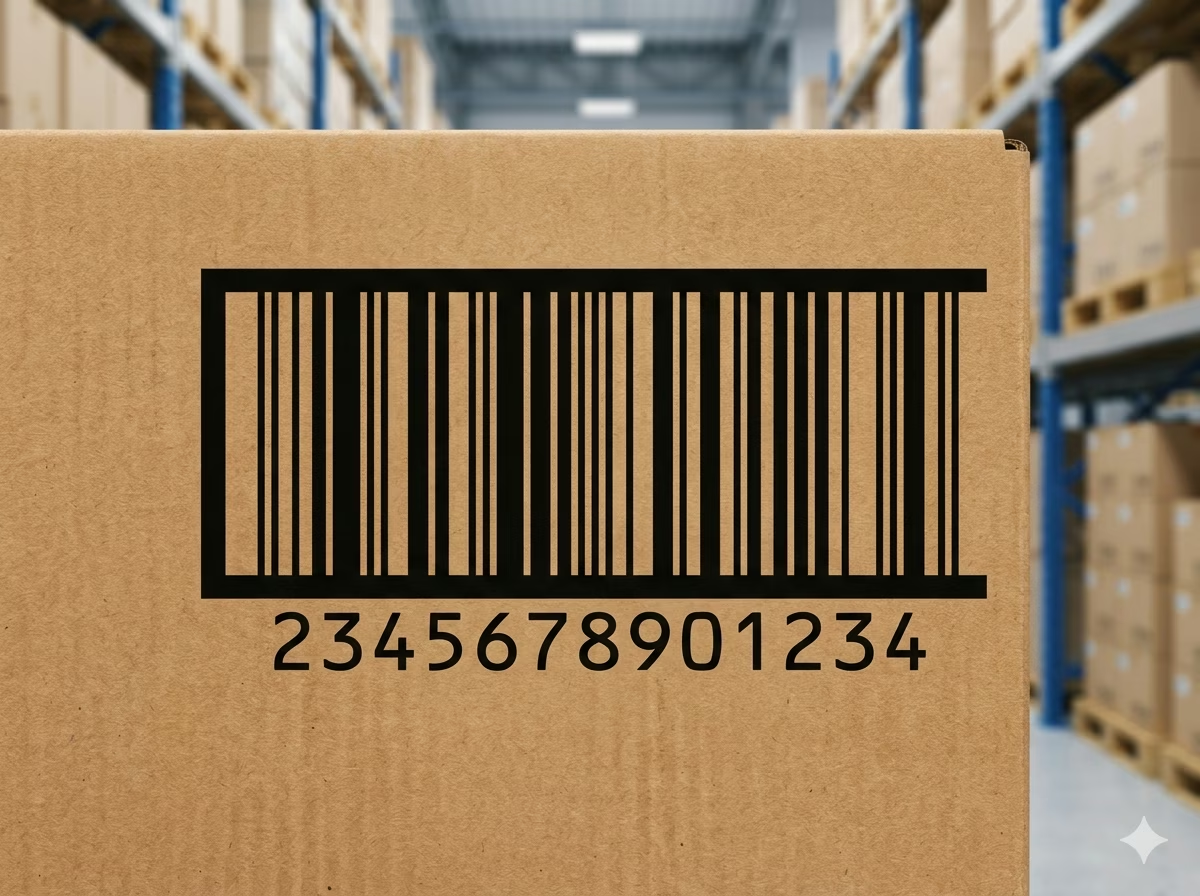
Outer Carton and Shipping Case Labels (ITF-14)
ITF-14 is the GS1-mandated barcode for outer shipping cases and display cartons worldwide. Retailers such as Walmart, Target, Costco, and Amazon require ITF-14 on every case shipped to their distribution centers. Encode your 14-digit GTIN-14 directly on corrugated cardboard at the correct X-dimension and bar height for reliable scanning by forklift-mounted and fixed warehouse scanners.
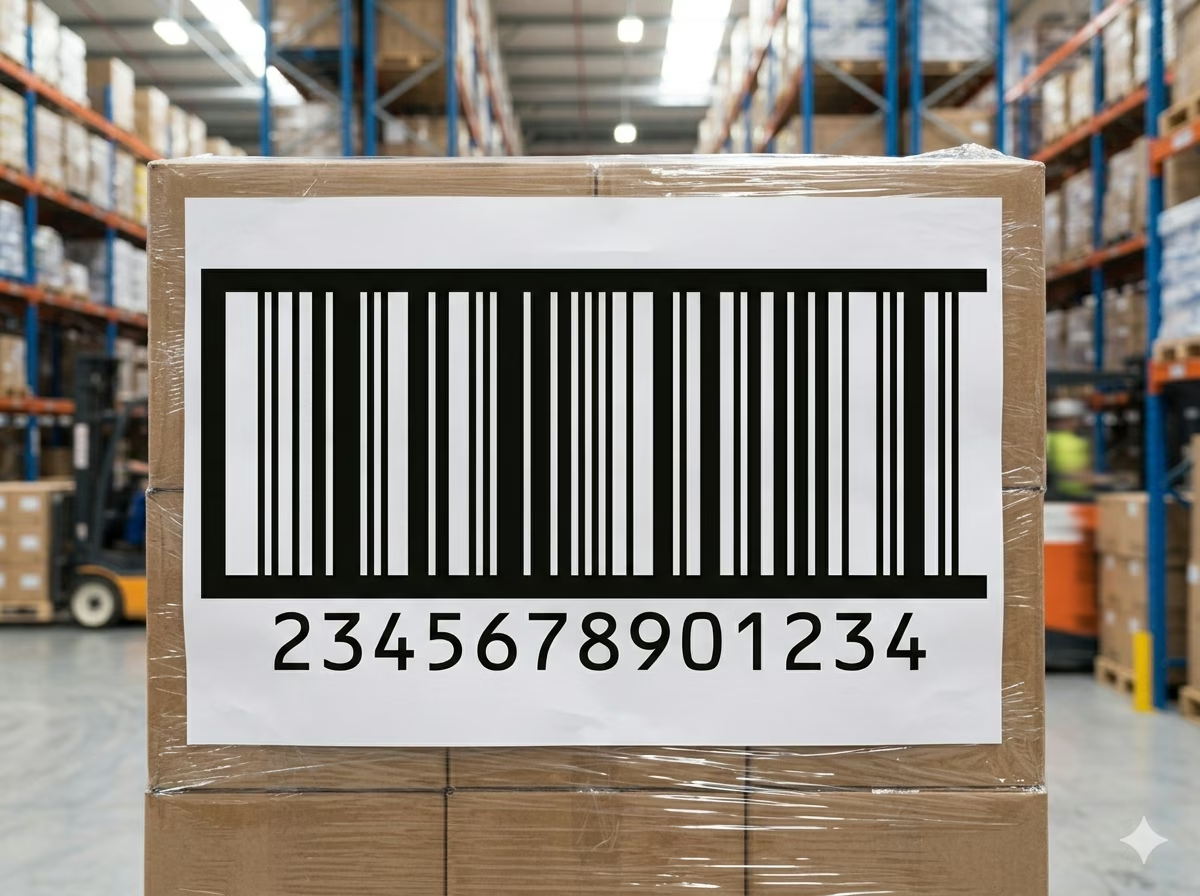
Warehouse Pallet and Case Inventory
Print ITF barcodes on pallet labels, case stickers, and bin location tags for warehouse inventory management. ITF's high density means more digits fit in a smaller label area, and its tolerance for imperfect print surfaces makes it reliable on tape-sealed cartons, stretch-wrapped pallets, and printed-in-line packaging lines.
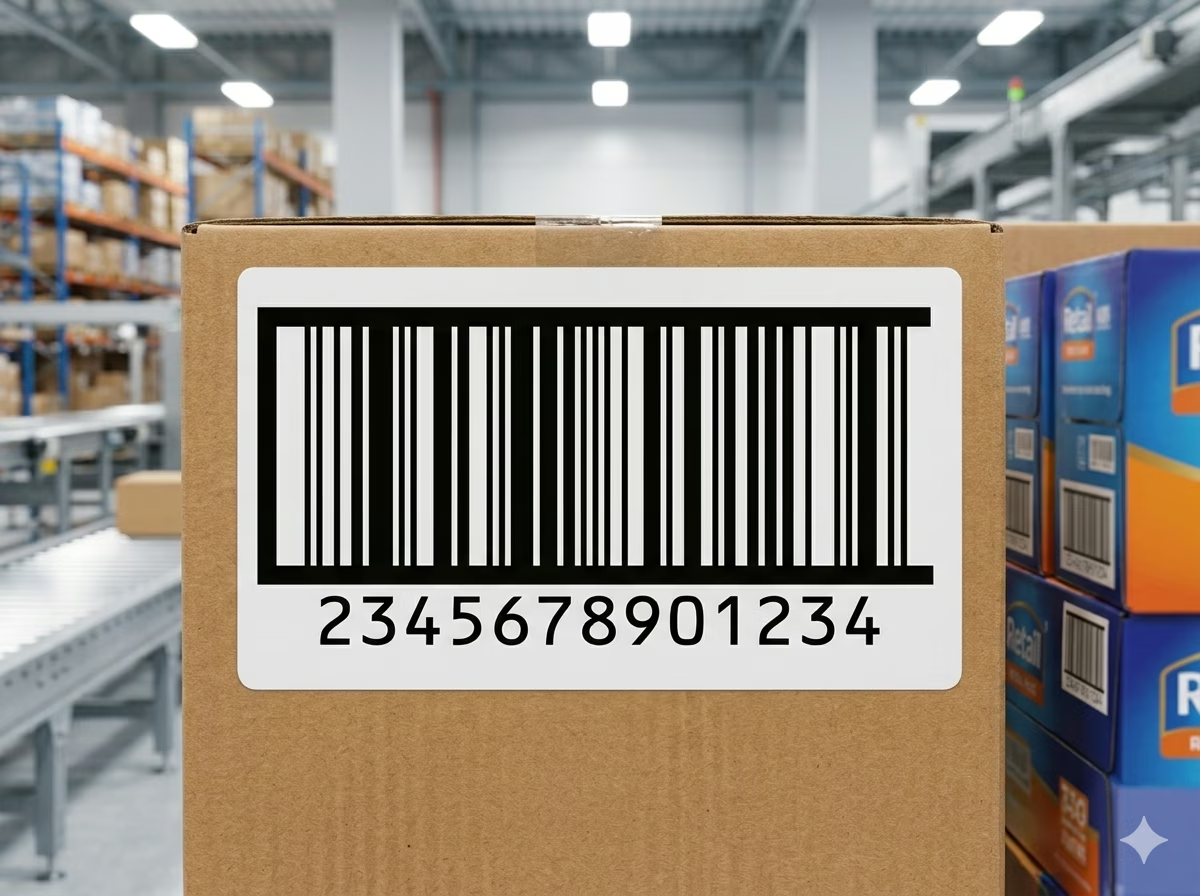
Retail Supply Chain Compliance Labels
Consumer goods manufacturers use ITF-14 to comply with major retailer vendor requirements. Generate compliant ITF-14 barcodes with the correct dimensions and bearer bars for GS1-128-free packaging lines where ITF is the approved direct-print format. Validate barcode quality before submission to retail compliance portals or physical label audits.
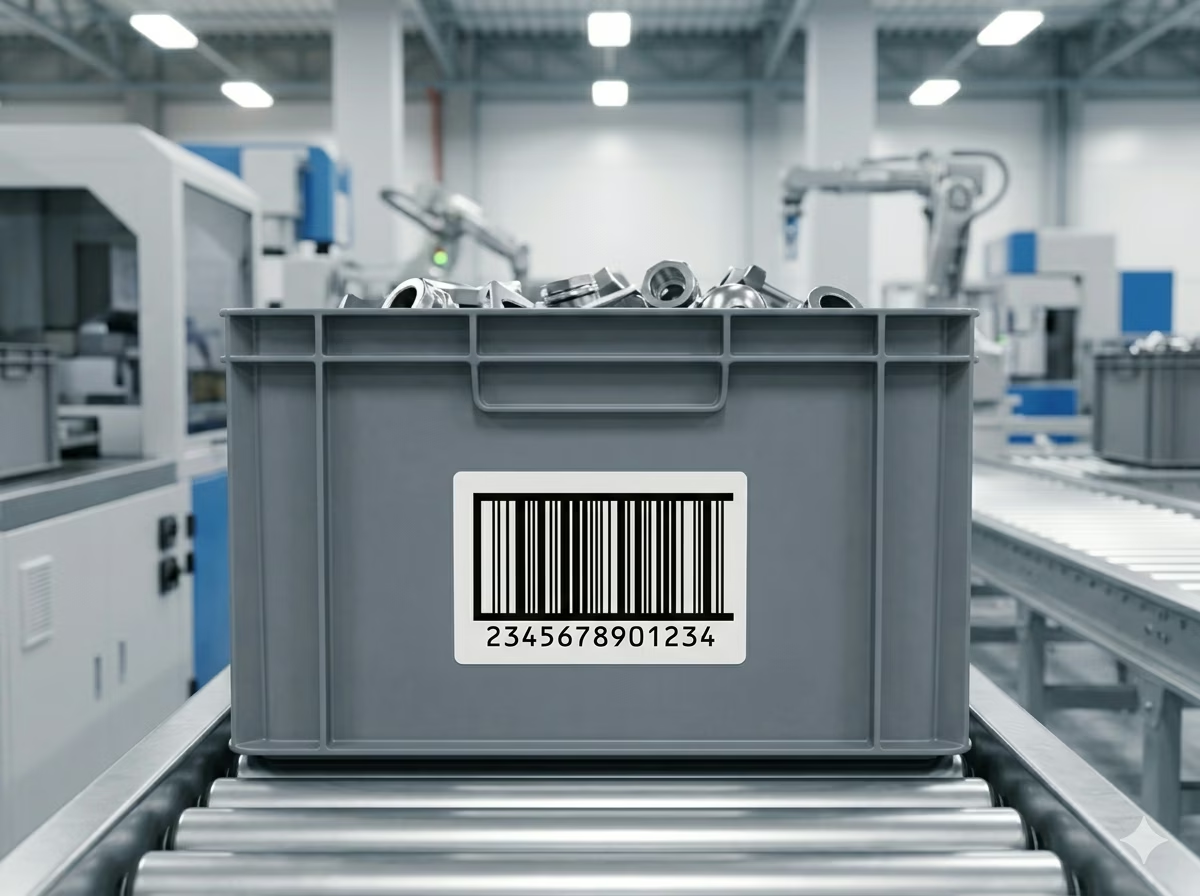
Industrial Parts and Manufacturing Tracking
Manufacturers use ITF barcodes to label component bins, production batches, work orders, and finished goods with numeric part numbers and serial identifiers. ITF's compact encoding fits long part numbers onto small bin labels, and its robustness in harsh print conditions — grease, heat, and vibration — suits factory floor environments.
Food and Beverage Outer Packaging
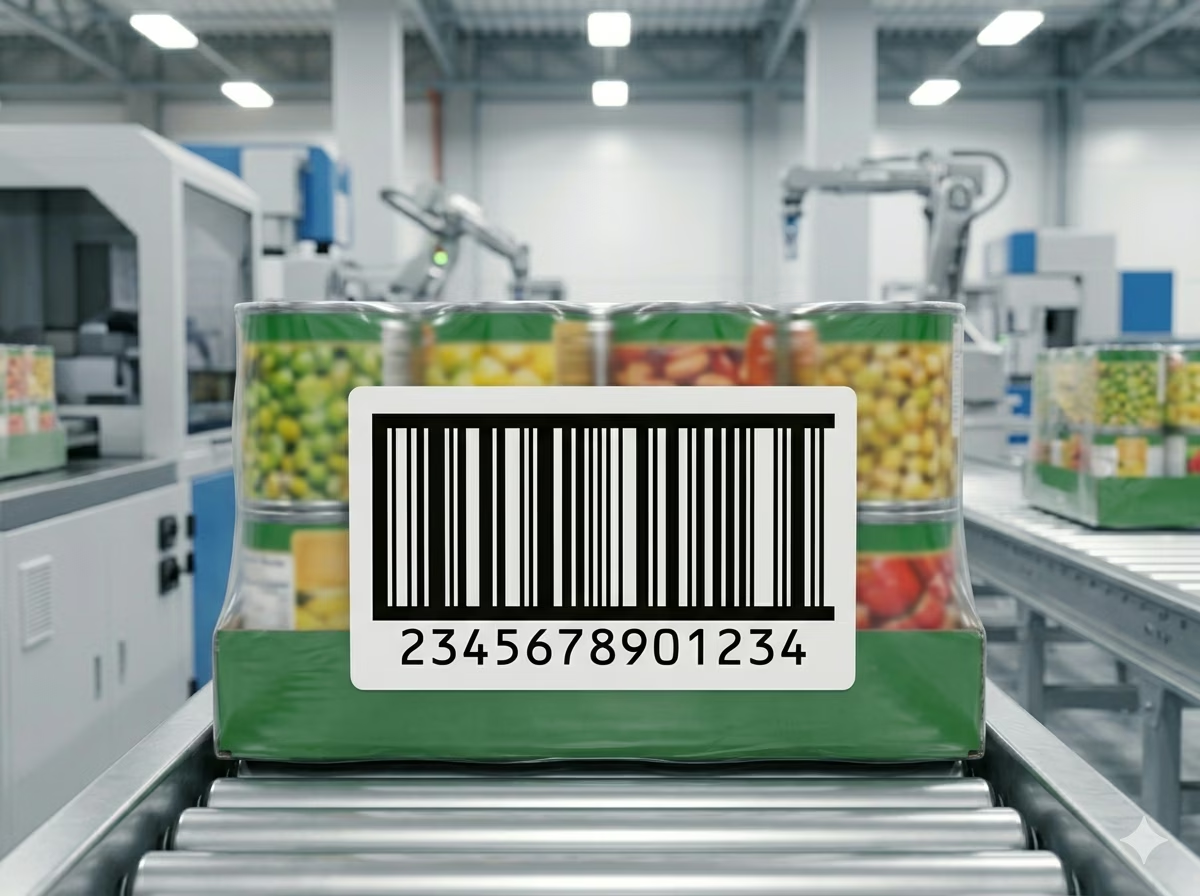
Food manufacturers print ITF-14 on multi-pack outer cases and retail display units shipped to grocery distribution centers. GS1 compliance for food supply chains requires ITF-14 or GS1-128 on outer case packaging; ITF-14 is preferred for direct corrugated printing due to its tolerance for surface irregularities and wide-bar readability at high conveyor speeds.
Pharmaceutical Case and Pallet Labels
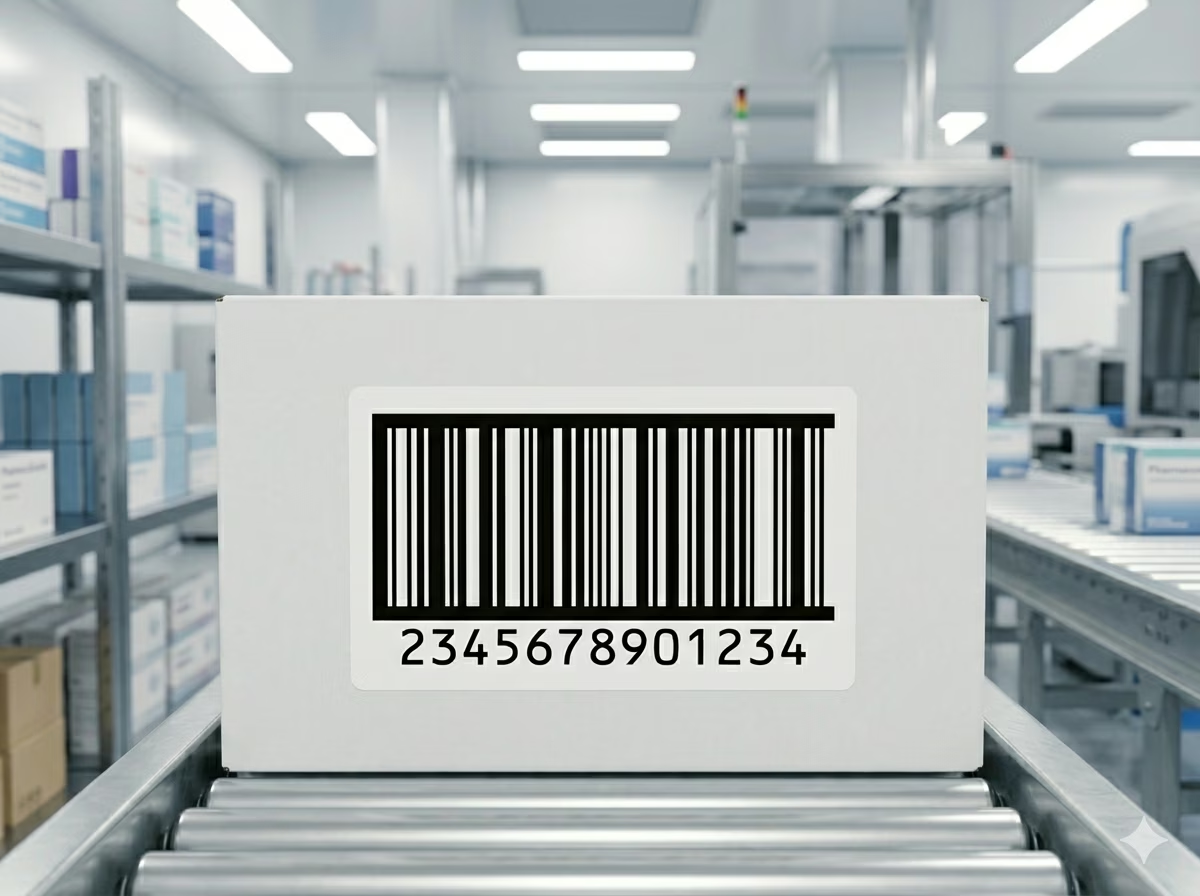
Pharmaceutical distributors use ITF-14 on secondary and tertiary packaging cases to enable automated receiving and inventory at hospital and pharmacy distribution centers. ITF's high scan reliability and numeric density make it suitable for high-speed conveyor scanning in regulated pharmaceutical supply chains where read failure rates must be minimized.
ITF Barcode — Frequently Asked Questions
Technical answers to the most common questions about ITF encoding rules, data requirements, ITF-14 compliance, check digits, and practical usage.
What characters can ITF encode?
ITF encodes numeric digits 0–9 only. It does not support letters, punctuation, or any non-numeric characters. If you need to encode alphanumeric data, use Code 128 or Code 39 instead. ITF always encodes an even number of digits — if your input has an odd digit count, a leading zero is prepended automatically to make it even.
What is the difference between ITF and ITF-14?
ITF (Interleaved 2 of 5) is the general symbology that can encode any even-length numeric string of variable length. ITF-14 is a specific application of ITF that encodes exactly 14 digits — a GS1 GTIN-14 — and is printed on outer shipping cases and cartons for retail supply chain compliance. ITF-14 always includes an optional check digit as the 14th digit, calculated using the GS1 standard Mod 10 algorithm. Use ITF for general numeric encoding and ITF-14 specifically when generating GS1-compliant outer case barcodes.
Does ITF have a check digit?
Standard ITF does not require a check digit by specification, though one may be added as the last digit of your data using any chosen algorithm. ITF-14, the GS1-standardized outer case variant, includes a mandatory Mod 10 check digit as its 14th digit — this check digit is part of the GTIN-14 and must be calculated correctly before encoding. This generator encodes whatever numeric string you provide; for ITF-14, ensure your 14-digit GTIN-14 includes the correct GS1 check digit.
Why must ITF have an even number of digits?
ITF uses an interleaved encoding scheme where two digits are always encoded together — one in the bars and one in the spaces of the same symbol character. This pairing means the total digit count must always be even. If you supply an odd number of digits, the encoder prepends a leading zero (e.g., 12345 becomes 012345) so that digits pair correctly. Be aware of this when your receiving system decodes the barcode — it will read the zero-padded value.
When should I use ITF instead of Code 128 or Code 39?
Use ITF when your data is purely numeric, your label is printed on corrugated cardboard or other rough surfaces, or when GS1 compliance for outer carton labeling (ITF-14) is required. ITF produces narrower barcodes than Code 39 for the same numeric data and is more tolerant of imperfect printing surfaces than Code 128. Choose Code 128 over ITF when your data contains letters or special characters, or when you need variable-length encoding without an even-digit constraint.
What are bearer bars in ITF barcodes?
Bearer bars are horizontal lines printed above and below an ITF barcode that frame the entire symbol. They protect against partial reads — where a scanner detects only a portion of the barcode due to edge print defects, substrate flex, or misalignment on corrugated surfaces — by ensuring the scanner sees the full symbol boundary. GS1 recommends bearer bars on all ITF-14 barcodes printed on corrugated cases, and many retail vendor compliance specifications require them. Check your retailer's vendor guide to determine whether bearer bars are mandatory for your shipments.
What resolution should I use when downloading ITF barcodes as PNG?
For carton and pallet labels, download as SVG whenever possible — SVG is resolution-independent and scales to any label size without pixelation. If PNG is required, use at least 300 DPI for standard labels and 600 DPI for small labels below 25mm. For ITF-14 on corrugated cases, GS1 specifies a minimum X-dimension of 0.635mm at a 100% magnification factor — ensure your print resolution supports this bar width at the intended print size.
Is my data safe when using this generator?
Yes. All ITF encoding is performed entirely in your browser using client-side JavaScript. Your input data — including GTIN-14 values, part numbers, or batch identifiers — is never transmitted to any server and never stored anywhere. Close the browser tab and all data is gone. This tool is safe to use with internal supply chain identifiers and proprietary product codes.
Specification reference
Read the full ITF (Interleaved 2 of 5) specification — character set, check digit, quiet zone, density, and the governing ISO/IEC 16390; AIM USS-I 2 of 5 standard — in our barcode glossary.
ITF (Interleaved 2 of 5) specificationRelated barcode types
Compare ITF (Interleaved 2 of 5) with similar symbologies, or open their full specifications.
- ITF-14
The GTIN-14 carton-level barcode: ITF with thick bearer bars, printed directly on corrugated shipping cases.
- Code 128C
Code 128 locked to code set C — digit pairs packed two per character for maximum numeric density.
- MSI Plessey (Mod 10)
A digits-only inventory barcode with a single Mod 10 check digit, descended from the Plessey code.
Related barcode tools
Need more than one barcode, a printed label sheet, or a way to check the result? These tools use the same generator, so the output matches.
- Bulk Barcode GeneratorImport Excel or CSV, paste a list, or create a sequence and get a barcode for every row. Export as PNG, SVG, JPG, or a ZIP.
- Barcode Label PrintPrint a full sheet of labels that lines up with Avery label stock, at the correct physical size.
- Barcode ScannerVerify a printed label before you run the whole batch — decode it from an image or your camera.
- Barcode MakerFull control over size, colors, font, quiet zone, and layout for a single barcode.
Generate Your ITF Barcode Now — Free, Instant, No Account Required
This free ITF barcode generator is ready to use immediately. Type your numeric data, adjust the bar height and width to match your label stock, and download a print-ready PNG or SVG barcode in seconds. No signup, no watermarks, no usage limits. All encoding happens locally in your browser — your data stays private. Generate one ITF barcode or thousands of ITF-14 carton labels; the tool is completely free regardless of volume.