
Free HIBC Code 128 Barcode Generator — Healthcare UDI Labels, Instant & Compliant
Generate HIBC Code 128 barcodes online for free — no signup, no software, no limits. Enter your Labeler Identification Code (LIC) and product data to produce a compliant Health Industry Bar Code in PNG or SVG format within seconds. HIBC Code 128 is the FDA-recognized linear barcode for medical device UDI labeling, pharmaceutical packaging, and healthcare supply chain management. Real-time preview updates as you type. Download individual barcodes or bulk-generate hundreds from a list — all encoding happens in your browser.

What Is HIBC Code 128?
HIBC Code 128 is a variant of the Code 128 linear barcode symbology defined by the Health Industry Business Communications Council (HIBCC) under the ANSI/HIBC 2.6 Supplier Labeling Standard. It is specifically engineered for the healthcare industry to encode medical device, pharmaceutical, and laboratory supply identifiers in a standardized, globally recognized format. Every HIBC Code 128 barcode begins with a '+' character as the industry identifier, followed by a HIBCC-issued Labeler Identification Code (LIC), a Product or Catalog Number (PCN), and a Unit of Measure indicator — collectively called the Primary Data Structure. An optional Secondary Data Structure appends lot number, serial number, expiration date, manufacture date, and quantity. HIBC Code 128 is one of three FDA-accredited Unique Device Identifier (UDI) issuing systems alongside GS1 and ICCBBA, and is accepted by regulatory authorities in the US, EU, Canada, Australia, and more than 50 countries worldwide.
- FDA-Accredited UDI Standard for Medical DevicesHIBC Code 128 is one of the three barcode formats recognized by the U.S. Food and Drug Administration (FDA) for Unique Device Identification (UDI) under 21 CFR Part 801. Medical device manufacturers using the HIBCC issuing agency encode their device identifier (DI) in the Primary Data Structure and their production identifier (PI) — including lot number, serial number, and expiration date — in the Secondary Data Structure. HIBC UDI data must also be submitted to the FDA's Global UDI Database (GUDID). Compliance was mandatory for all device classes by September 24, 2024.
- Structured Primary and Secondary Data FormatHIBC Code 128 uses a two-part data architecture. The Primary Data Structure encodes: '+' (industry flag) + LIC (4-character Labeler ID) + PCN (up to 18 alphanumeric characters for product code) + Unit of Measure digit (0–9). The Secondary Data Structure, encoded in a separate or concatenated symbol, adds a Link Character (tying it to the primary), production data such as expiry date and lot number, and a final MOD 43 check character. When concatenated into a single symbol, a '/' delimiter replaces the secondary '+' flag.
- MOD 43 Check Character — Mandatory Data IntegrityEvery HIBC barcode must include a MOD 43 check character calculated from all encoded data — including the '+' flag, LIC, PCN, unit of measure, and all secondary data fields. This check digit is computed automatically by the encoder. Scanners verify the MOD 43 character on every read and reject mismatches, providing a healthcare-grade error detection layer critical in environments where a misread drug label or device identifier could directly affect patient safety.
- Globally Accepted Across Healthcare Regulatory FrameworksHIBC Code 128 is accepted not only by the FDA but also by the European Union's EUDAMED database (EU MDR / EU IVDR), Health Canada, Australia's TGA, and regulatory bodies in Japan, Brazil, and over 50 other countries participating in IMDRF UDI harmonization. The HIBCC standard (ANSI/HIBC 2.6) is developed in accordance with ANSI procedures and aligns with ISO/IEC 15417 for the underlying Code 128 symbology, ensuring international scanner compatibility.
- Alphanumeric Character Set — Letters, Digits, and Special CharactersHIBC Code 128 supports digits 0–9, uppercase letters A–Z, and a defined set of special characters: hyphen (-), plus (+), space, asterisk (*), dollar sign ($), slash (/), percent (%), and period (.). The LIC assigned by HIBCC uses uppercase alphanumeric characters; the PCN field supports the same set. Unlike some restricted healthcare barcode formats, this character range accommodates catalog numbers, lot identifiers, and serial numbers that contain mixed alphanumeric data of variable length.
HIBC Code 128 specifications
Code 128 formatted to the Health Industry Bar Code supplier labeling standard for medical products. The table below lists the exact HIBC Code 128 specifications — character set, check digit, X-dimension, quiet zone and the governing ANSI/HIBC Supplier Labeling Standard (HIBCC); symbology basis ISO/IEC 15417 standard — so you can size and print the symbol correctly the first time.
| Character set | Full ASCII via Code 128; HIBC primary structure uses A-Z, 0-9, - . $ / + % space |
|---|---|
| Data length | Variable; LIC (4 chars) + item (1-13 chars) + optional lot/serial fields, per HIBC rules |
| Check digit | Mod 103 (Code 128) plus a mandatory HIBC Mod 43 check character appended to the data |
| Density | Same as Code 128 at the chosen X-dimension |
| X-dimension (module width) | 0.25-0.40 mm typical on medical labels |
| Quiet zone | 10X on each side |
| Magnification | Scales with X-dimension; small-item medical labels often run 0.25 mm X |
| Bar / space ratio | Variable-width bars and spaces |
| Standard | ANSI/HIBC Supplier Labeling Standard (HIBCC); symbology basis ISO/IEC 15417 |
| Introduced | 1986 — Health Industry Business Communications Council (HIBCC) |
Typical uses: Medical device UDI labeling (US FDA, EU MDR ecosystems); Pharmaceutical and hospital supply item and lot tracking; Surgical instrument and implant traceability.
How HIBC Code 128 compares to similar barcode types
Choosing the wrong symbology is the most common cause of barcodes that scan in the warehouse but get rejected downstream. This table compares HIBC Code 128 with the formats most often confused with it, on the three properties that decide compatibility: character set, check digit, and quiet zone.
| Symbology | Character set | Check digit | Quiet zone |
|---|---|---|---|
| HIBC Code 128(this page) | Full ASCII via Code 128; HIBC primary structure uses A-Z, 0-9, - . $ / + % space | Mod 103 (Code 128) plus a mandatory HIBC Mod 43 check character appended to the data | 10X on each side |
| Code 128 | All 128 ASCII characters: 0-9, A-Z, a-z, punctuation, and control characters (code set dependent) | Mandatory Mod 103 check character, calculated automatically by the encoder | 10X on each side (minimum 2.5 mm recommended for general scanning) |
| HIBC Code 39 | Code 39 base set (0-9, A-Z, space, - . $ / + %); HIBC strings are uppercase alphanumeric plus - . $ / + % | Mandatory HIBC Mod 43 check character appended to the data | 10X on each side |
| GS1-128 | Full ASCII via Code 128; AI element strings are largely numeric with defined formats (e.g. YYMMDD dates) | Mandatory Mod 103 check character (Code 128) plus AI-embedded check digits such as the GTIN Mod 10 | 10X on each side |
How to Create an HIBC Code 128 Barcode — Step-by-Step
Creating a compliant, scannable HIBC Code 128 barcode with this free online generator takes under a minute. Follow these four steps:
Enter Your HIBC Data String
Type or paste your HIBC-formatted data string into the input field. A typical Primary Data Structure has the form: A999BJC5D6E71 — representing your HIBCC-assigned LIC (e.g., A999), your Product/Catalog Number (e.g., BJC5D6E7), and a Unit of Measure digit (1). Do not include the leading '+' or the trailing MOD 43 check character — the generator adds these automatically in accordance with ANSI/HIBC 2.6. For Secondary Data, you may concatenate using the slash '/' delimiter format supported by the standard.
Adjust Size and Appearance for Your Label
Use the settings panel to set bar height, module width, and quiet zone to match your label stock dimensions and printer resolution. ANSI/HIBC 2.6 recommends an X-dimension of 0.010 inches (0.25 mm) as the standard minimum for healthcare labels. Toggle the human-readable interpretation (HRI) on — it is required for FDA UDI compliance so clinical staff can read the value manually if a scanner is unavailable. The live preview reflects every adjustment instantly.
Preview, Validate, and Verify
Confirm the barcode preview looks correct: verify the HRI text shows the expected LIC, PCN, and unit of measure, and that quiet zones on both sides are visually clear. For production healthcare labels, scan the on-screen barcode preview with a mobile scanner app before printing to verify readability. For critical applications, use a certified barcode verifier to grade print quality against ISO/IEC 15416 — ANSI/HIBC 2.6 requires a minimum grade of C/06/660.
Download or Bulk Export
Click Download to save your HIBC Code 128 barcode as a PNG (for label software, Word, or digital use) or SVG (for print-ready, resolution-independent output). For batch production — for example, generating unique secondary data symbols for each lot number in a production run — switch to the bulk input panel, paste your list of data strings, and download a ZIP archive of all barcodes at once.
Who Should Use This HIBC Code 128 Barcode Generator?
This free online HIBC Code 128 generator is built for anyone who needs compliant, production-quality healthcare barcodes without investing in specialized label software. Here is who benefits most.
Medical Device Manufacturers
Generate HIBC Code 128 UDI barcodes for FDA and EU MDR compliance. Produce Primary Data Structure symbols for device identification and Secondary Data Structure symbols encoding lot, serial, and expiration data — then validate artwork before submitting label proofs for regulatory review.
Pharmaceutical and IVD Companies
Create HIBC Code 128 barcodes for drug packaging, reagent kit labels, and diagnostic consumables. Bulk-generate lot-specific secondary data symbols across production batches and download print-ready SVG files for integration into packaging artwork and track-and-trace systems.
Regulatory Affairs and Quality Teams
Quickly prototype HIBC barcode label layouts during 510(k) submissions, CE marking dossiers, or internal label change control processes. Validate that data strings produce compliant, scannable symbols before routing label artwork for approval — without requiring a barcode software license.
Developers and System Integrators
Generate reference HIBC Code 128 barcodes to test scanner configuration, validate MOD 43 check character logic, and verify HIBCC data parsing in hospital information systems, ERP integrations, or warehouse management systems handling healthcare product data.
HIBC Code 128 Barcode Generator Features
Everything you need to create compliant, production-quality HIBC Code 128 barcodes — from structured UDI data encoding and real-time preview to bulk generation, size controls, and lossless SVG output.
HIBC-Compliant Encoding with '+' Flag and MOD 43
The generator automatically prepends the HIBC industry identifier '+' and appends the correct MOD 43 check character to every barcode. You do not need to manually calculate or include these elements — the encoder follows ANSI/HIBC 2.6 rules precisely. Enter your LIC and product data; the tool produces a fully compliant symbol ready for medical device labeling, pharmaceutical packaging, and healthcare supply chain applications.
Real-Time Preview as You Type
The barcode preview updates live with every keystroke. See the exact symbol that will be generated — including bar pattern, human-readable text (HRI), and overall proportions — before downloading. The HRI displays your encoded string in the HIBC-standard format with slashed zeros and underscores for spaces, exactly as required by ANSI/HIBC 2.6 for human-readable interpretation on labels.
PNG and SVG Download — Print-Ready Output
Download your HIBC Code 128 barcode as a high-resolution PNG for label software, Word documents, or digital delivery, or as a lossless SVG for print-ready workflows, vector design files, and label templates. SVG barcodes scale to any size without pixelation, making them ideal for high-resolution medical label printing at any X-dimension from 0.010 inches (the HIBC recommended minimum) upward.
Adjustable Bar Height, Module Width, and Quiet Zone
Control all critical dimensional parameters of your HIBC Code 128 barcode: bar height, module (X-dimension) width, human-readable text font size, and quiet zone margins. ANSI/HIBC 2.6 recommends an X-dimension of 0.010 inches (0.25 mm) and a minimum print quality of C/06/660 per ISO/IEC 15416. The generator includes compliant quiet zones by default and allows you to adjust dimensions for your specific label stock and printer resolution.
Human-Readable Interpretation — Toggle On or Off
Toggle the HRI text beneath the barcode on or off. When enabled, the generator displays the encoded string with HIBC-standard formatting conventions: zeros rendered as slashed zeros (Ø) and spaces rendered as underscores (_), as specified in ANSI/HIBC 2.6. This formatted HRI allows clinical staff to read and manually enter the value if a scanner is unavailable, which is also a requirement for FDA UDI labels.
Bulk HIBC Barcode Generation
Generate hundreds of unique HIBC Code 128 barcodes in one operation using the bulk input panel. Enter one product code value per line and download all barcodes as a ZIP archive of PNG or SVG files. Ideal for labeling entire product lines, producing serialized secondary data symbols with unique lot or serial numbers, or creating print-ready batches for label validation before a product launch.
No Signup, No Watermarks, No Limits — Private and Secure
This HIBC Code 128 generator is completely free with no usage caps, no account required, and no watermarks on downloaded files. All encoding is performed client-side in your browser — your LIC, PCN, lot numbers, serial numbers, and any other healthcare identifiers are never transmitted to any server and never stored. The tool is safe for use with sensitive product and regulatory data.
Color Customization — Bar and Background Colors
Customize the foreground bar color and background color of your HIBC Code 128 barcode to match label stock or brand guidelines. Custom colors are fully supported in both SVG and PNG output. For all operational healthcare labels, maintain high contrast between bars and background — dark bars on a white or light background are required to achieve the minimum ISO/IEC 15416 print quality grade mandated by ANSI/HIBC 2.6.
HIBC Code 128 Use Cases & Real-World Applications
HIBC Code 128 is mandated or preferred across a wide range of healthcare and life sciences applications. Here are the most common real-world scenarios where this barcode format is required or strongly recommended.
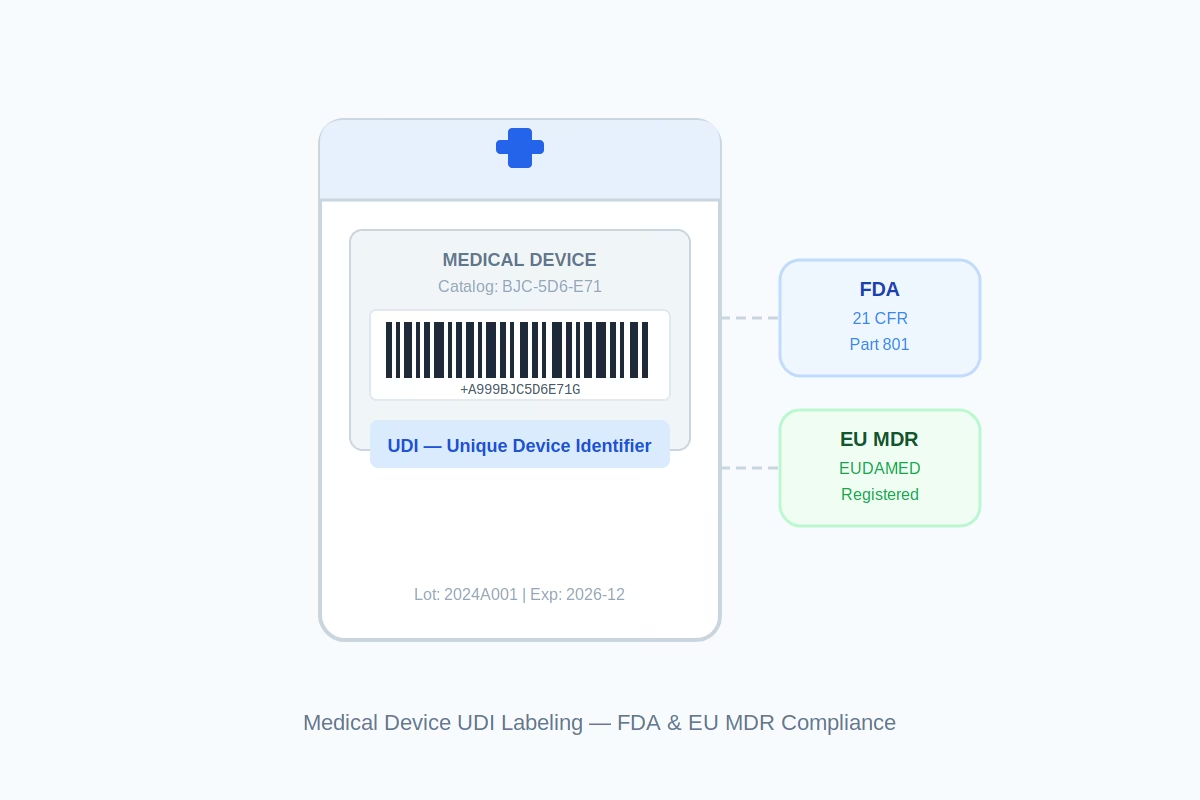
Medical Device UDI Labeling (FDA & EU MDR)
Medical device manufacturers registered with HIBCC as their FDA-accredited UDI issuing agency must place an HIBC Code 128 barcode on every device label and package. The Primary Data Structure encodes the Device Identifier (DI) — the LIC plus catalog number — while the Secondary Data Structure encodes the Production Identifier (PI): lot number, serial number, expiration date, or manufacture date. UDI compliance under 21 CFR Part 801 became mandatory for all device classes by September 24, 2024.
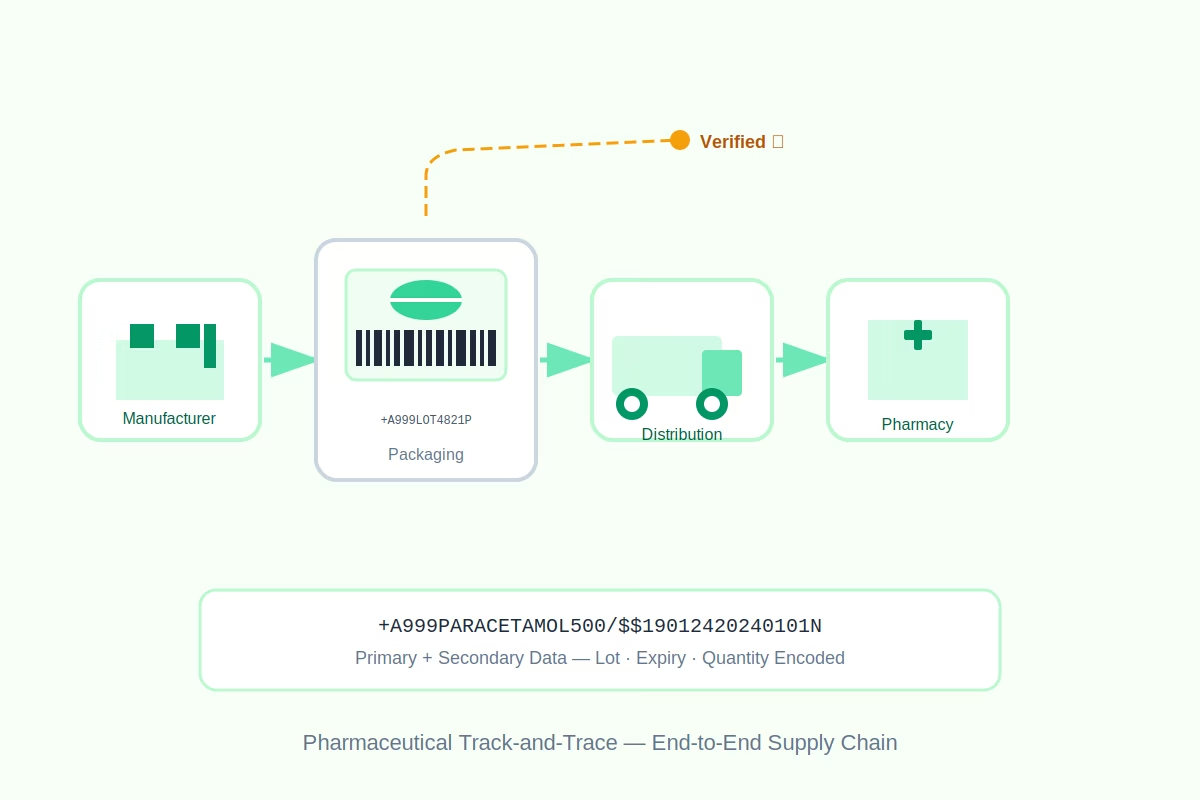
Pharmaceutical Drug Packaging and Track-and-Trace
Pharmaceutical manufacturers use HIBC Code 128 to label drug packages with lot number, expiration date, and product code for supply chain track-and-trace and anti-counterfeiting compliance. The HIBC Secondary Data Structure can encode both expiry date (in YYYYMMDD or Julian format) and lot number in a single concatenated symbol, enabling automated verification at each node in the distribution chain.
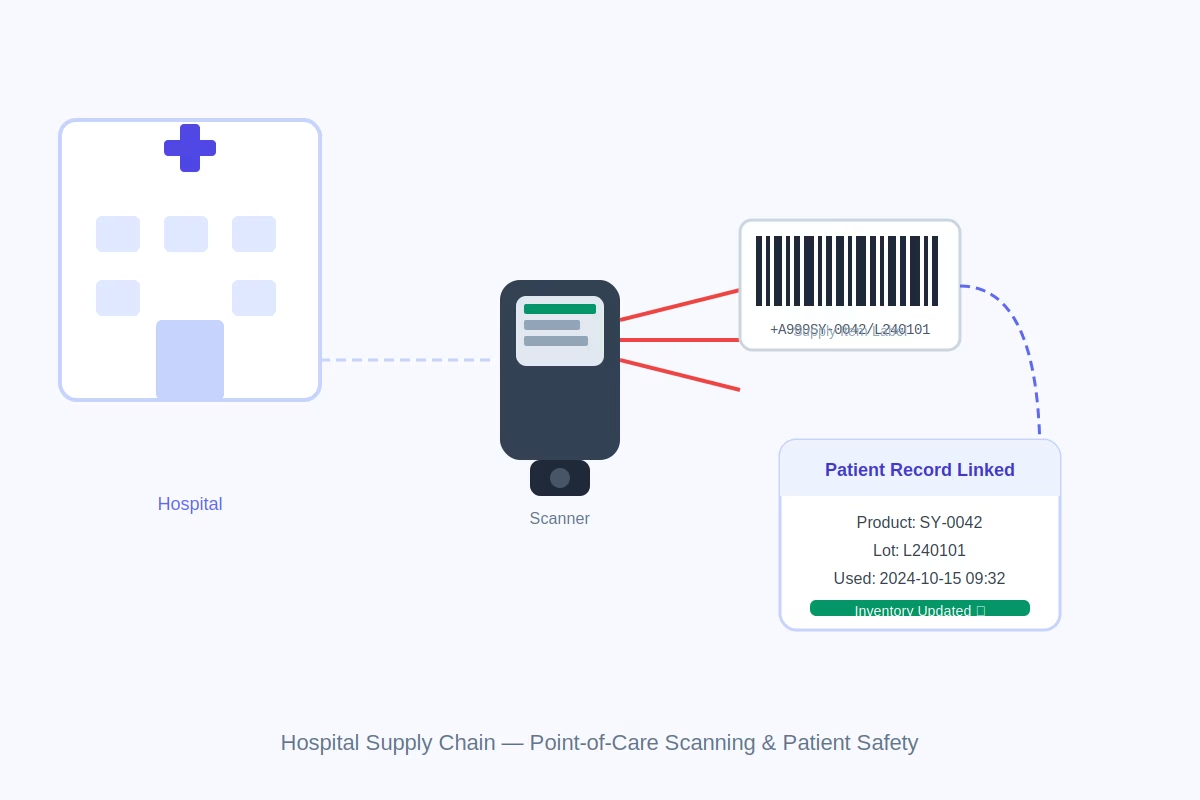
Hospital and Clinical Supply Chain Management
Hospitals and integrated delivery networks (IDNs) use HIBC Code 128 barcodes at the point of care for automated inventory replenishment, charge capture, and patient safety systems. Scanning an HIBC barcode at the point of use links a specific medical product — including its lot number and expiry — directly to a patient record, supporting adverse event reporting and recall management workflows.
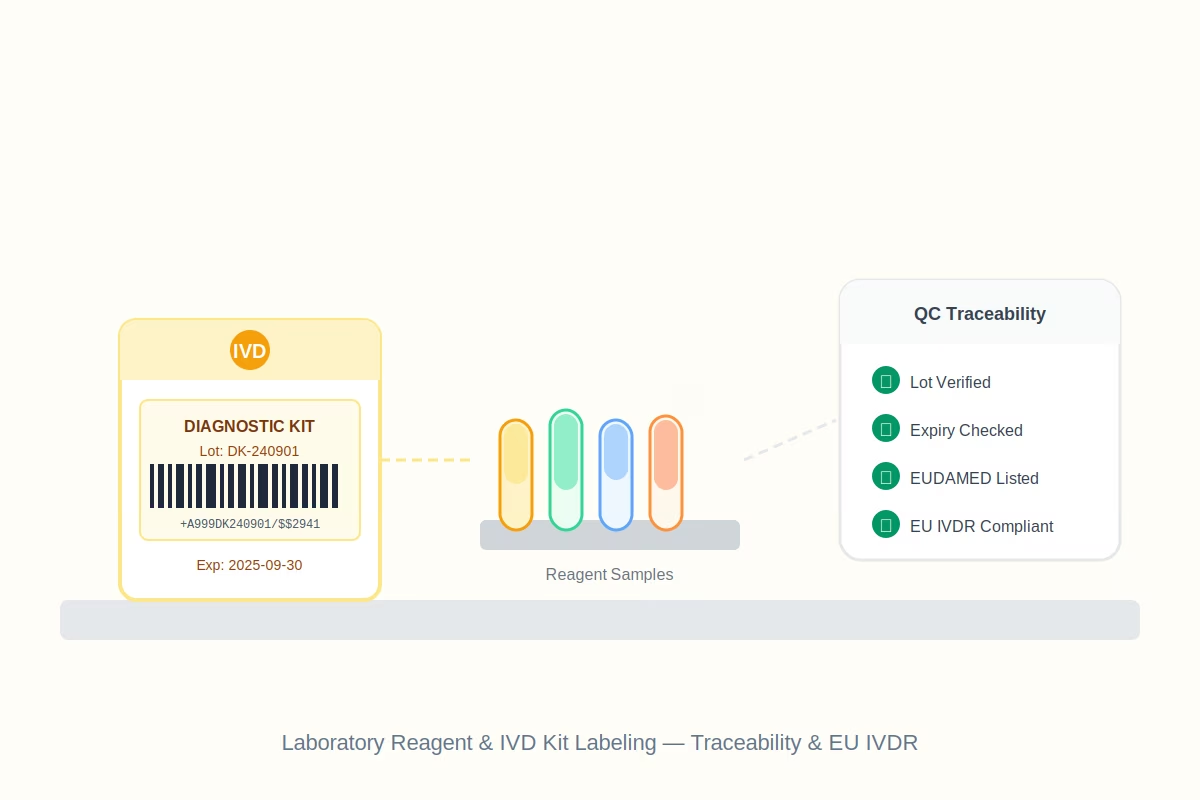
Laboratory Reagent and Diagnostic Kit Labeling
In vitro diagnostic (IVD) manufacturers use HIBC Code 128 to label reagent kits, calibration materials, and diagnostic consumables. The HIBC Secondary Data Structure accommodates lot number and expiration date encoding critical for reagent traceability and laboratory quality control. HIBC is one of the three accredited issuing agencies for EU IVDR UDI compliance, with mandatory registration in EUDAMED phased through 2026.
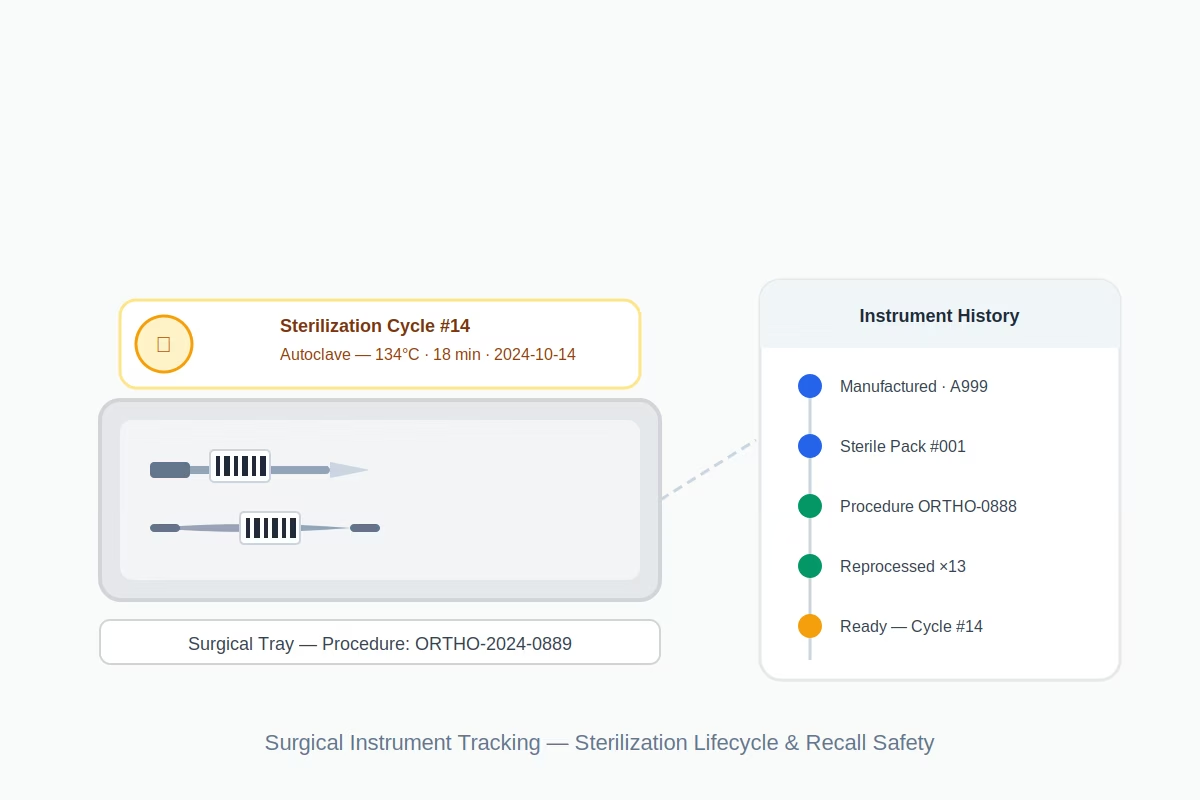
Surgical Instrument and Implant Tracking
Reusable surgical instruments and implantable devices require durable, reliable barcode labels that survive sterilization, reprocessing, and repeated handling. HIBC Code 128 barcodes on metal instrument tags or adhesive labels enable surgical trays to be scanned before and after procedures for automated instrument tracking, matching instruments to specific procedures and patients for recall and safety reporting.
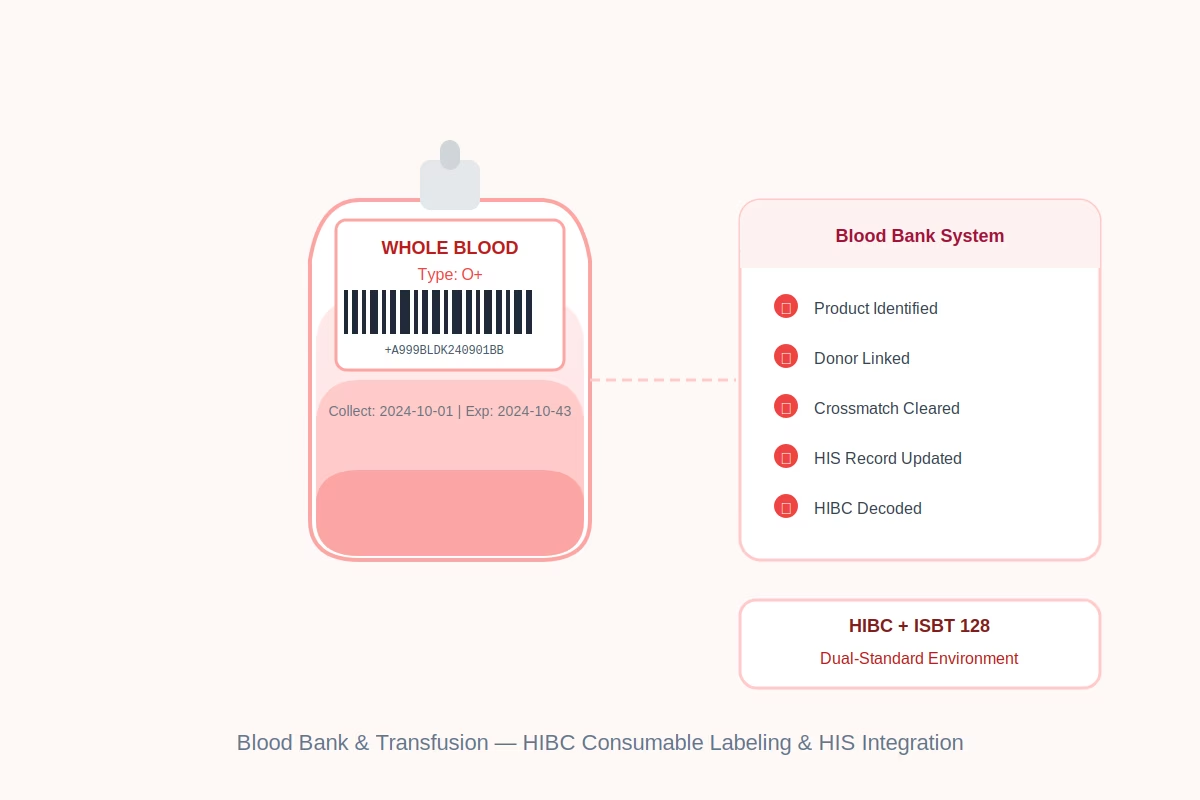
Blood Bank and Transfusion Service Labels
While ISBT 128 is the primary standard for blood product identification, HIBC Code 128 is used in blood bank equipment, collection kits, and reagent labeling where HIBCC product identification is required. HIBC-labeled blood bank consumables integrate with hospital information systems that already decode HIBC symbols at the point of care, simplifying dual-standard scanning environments.
HIBC Code 128 — Frequently Asked Questions
Technical answers to the most common questions about HIBC Code 128 encoding rules, data structure, MOD 43 check character, UDI compliance, and practical usage.
What is HIBC Code 128 and how does it differ from standard Code 128?
HIBC Code 128 is a healthcare-specific application of the Code 128 linear barcode symbology, defined by ANSI/HIBC 2.6 and managed by the Health Industry Business Communications Council (HIBCC). The key differences from standard Code 128 are: (1) every HIBC symbol must begin with a '+' character as the HIBC industry identifier; (2) the encoded data follows a prescribed structure — LIC + PCN + Unit of Measure for primary data; (3) a MOD 43 check character (not Code 128's standard Mod 103 check) is computed from all HIBC data and appended; and (4) the human-readable interpretation uses HIBC formatting conventions (slashed zeros, underscores for spaces). A standard Code 128 scanner can read the bars, but HIBC-aware systems additionally parse and validate the structured content.
What is a Labeler Identification Code (LIC) and how do I get one?
A Labeler Identification Code (LIC) is a unique 4-character alphanumeric identifier issued by HIBCC to each manufacturer ('labeler') of healthcare products. The LIC is the first element of every HIBC Primary Data Structure and links the barcode to a specific company in the HIBCC registry. To obtain an LIC, you must submit an application to HIBCC (hibcc.org) and pay a one-time subscription fee. Once issued, your LIC is permanent and can be used across all your product lines at no additional per-barcode charge. You cannot legally use an HIBC barcode with an LIC that has not been assigned to your organization.
What is the MOD 43 check character and do I need to calculate it manually?
The MOD 43 check character is a mandatory error-detection element required in every HIBC barcode. It is calculated by assigning a numeric value (0–42) to each character in the complete data string — including the '+' flag, LIC, PCN, and all secondary data — summing those values, and computing the remainder when divided by 43. The resulting remainder maps back to an alphanumeric character that is appended to the barcode. This generator computes and appends the MOD 43 check character automatically. You never need to calculate it manually. Scanners verify the check character on every read and reject any barcode where the computed value does not match.
What is the HIBC Primary Data Structure format?
The HIBC Primary Data Structure is the mandatory component of every HIBC Supplier Labeling Standard barcode. Its format is: + [LIC] [PCN] [Unit of Measure] [Link Character] [MOD 43 Check]. The '+' is the fixed HIBC flag. The LIC is your 4-character HIBCC-assigned labeler code. The PCN is your product or catalog number — up to 18 uppercase alphanumeric characters. The Unit of Measure is a single digit (0–9) indicating the packaging level (e.g., 0 = each, 1 = each with secondary data). The Link Character is derived from the MOD 43 calculation and connects primary to secondary data. The final MOD 43 character provides error detection. Example: +A999BJC5D6E71 encodes LIC 'A999', PCN 'BJC5D6E7', Unit of Measure '1'.
What production data can the HIBC Secondary Data Structure encode?
The HIBC Secondary Data Structure is optional but required for FDA UDI compliance when the device has a production identifier (PI). It can encode: expiration date (in formats such as YYYYMMDD, YYJJJ Julian, or MMYYYY); lot or batch number (up to 18 alphanumeric characters); serial number (up to 18 alphanumeric characters); manufacture date; and quantity. The secondary structure begins with '+' and a Link Character derived from the primary barcode's check calculation, followed by production data, and ends with a new MOD 43 check character. When concatenated into a single Code 128 symbol, the '+' and Link Character are replaced by a '/' delimiter and only one MOD 43 check is used for the combined string.
Is HIBC Code 128 required for FDA UDI compliance, or can I use GS1?
The FDA does not mandate a specific barcode symbology or issuing agency — it accredits three agencies: HIBCC (which issues HIBC barcodes), GS1 (which issues GTINs used in GS1-128 and GS1 DataMatrix), and ICCBBA (for human-derived medical products). You may choose any of the three. However, once you choose HIBCC as your issuing agency and obtain an LIC, your UDI barcodes must follow the HIBC standard — HIBC Code 128 or HIBC Data Matrix are the most common formats. Approximately 15% of devices in the FDA GUDID database use HIBCC-issued identifiers, with the remaining ~85% using GS1.
What print quality standard is required for HIBC Code 128 labels?
ANSI/HIBC 2.6 requires that Code 128 and Code 39 symbols in their final printed configuration achieve a minimum quality grade of C/06/660 as measured per ISO/IEC 15416. The notation means: grade C (on a scale of A–F), aperture 0.006 inches (6 mils), and 660nm illumination wavelength. HIBCC recommends that labelers target grade B/06/660 or better at the time of printing to allow for label degradation during distribution and storage. Use a certified ISO/IEC 15416 barcode verifier — not just a barcode scanner — to measure print quality. A scanner confirms a barcode can be read in ideal conditions; a verifier grades it against the standard.
What is the recommended X-dimension and quiet zone for HIBC Code 128?
ANSI/HIBC 2.6 recommends an X-dimension (module width — the width of the narrowest bar or space) of 0.010 inches (0.25 mm) as the standard for healthcare labels. Higher-resolution printing environments may use a smaller X-dimension, but this increases scanner compatibility risk. The quiet zone — the mandatory blank space on each side of the barcode — must be a minimum of 10 times the X-dimension, or at least 0.10 inches (2.54 mm), as required by the underlying ISO/IEC 15417 standard for Code 128. This generator includes correct quiet zones automatically at the default module width and all custom widths.
Can I generate concatenated HIBC primary and secondary barcodes with this tool?
Yes. To generate a concatenated HIBC symbol encoding both primary and secondary data in a single Code 128 barcode, enter your data using the HIBC concatenation format: [LIC][PCN][Unit of Measure]/[Secondary Data]. The '/' acts as the delimiter between primary and secondary segments in the concatenated format, replacing the secondary '+' flag and Link Character. The generator encodes the full concatenated string, prepends '+', and appends a single MOD 43 check character covering the entire data string. This is the recommended approach when label space is limited and both device identifier and production identifier must appear in one linear barcode.
Is my healthcare product data safe when using this generator?
Yes. All HIBC Code 128 encoding is performed entirely in your browser using client-side JavaScript. Your LIC, product catalog numbers, lot numbers, serial numbers, expiration dates, and any other sensitive healthcare identifiers are never transmitted to any server and never stored anywhere. Close the browser tab and all data is cleared from memory. This tool is safe to use with proprietary product data, pre-submission regulatory information, and any other sensitive identifiers.
Specification reference
Read the full HIBC Code 128 specification — character set, check digit, quiet zone, density, and the governing ANSI/HIBC Supplier Labeling Standard (HIBCC); symbology basis ISO/IEC 15417 standard — in our barcode glossary.
HIBC Code 128 specificationRelated barcode types
Compare HIBC Code 128 with similar symbologies, or open their full specifications.
- Code 128
A high-density, variable-length linear barcode that encodes all 128 ASCII characters, and the backbone symbology of modern logistics.
- HIBC Code 39
Code 39 carrying the Health Industry Bar Code supplier labeling structure — the legacy healthcare marking standard.
- GS1-128
Code 128 carrying GS1 Application Identifier element strings — the standard barcode of global logistics.
Related barcode tools
Need more than one barcode, a printed label sheet, or a way to check the result? These tools use the same generator, so the output matches.
- Bulk Barcode GeneratorImport Excel or CSV, paste a list, or create a sequence and get a barcode for every row. Export as PNG, SVG, JPG, or a ZIP.
- Barcode Label PrintPrint a full sheet of labels that lines up with Avery label stock, at the correct physical size.
- Barcode ScannerVerify a printed label before you run the whole batch — decode it from an image or your camera.
- Barcode MakerFull control over size, colors, font, quiet zone, and layout for a single barcode.
Generate Your HIBC Code 128 Barcode Now — Free, Compliant, No Account Required
This free HIBC Code 128 barcode generator is ready to use immediately. Enter your LIC and product data, adjust dimensions to match your label stock, and download a print-ready PNG or SVG barcode in seconds. MOD 43 check character calculation is automatic. No signup, no watermarks, no usage limits. All encoding happens locally in your browser — your healthcare product data stays private. Generate one label or thousands; the tool is completely free regardless of volume.