
Free Pharmacode Barcode Generator — Create, Preview & Download Instantly
Generate Pharmacode barcodes online for free — no signup, no software, no limits. Enter any integer between 3 and 131070 and get a crisp, scannable Pharmacode barcode in PNG or SVG format within seconds. Pharmacode (Pharmaceutical Binary Code) is the industry-standard 1D barcode for pharmaceutical packaging lines, encoding a single numeric value into a pattern of thick and thin bars for high-speed automated verification. Real-time preview updates as you type. Download, bulk-generate, or copy your barcode instantly.

What Is Pharmacode?
Pharmacode, formally known as Pharmaceutical Binary Code, is a specialized one-dimensional barcode symbology developed exclusively for the pharmaceutical packaging industry. It encodes a single integer value between 3 and 131070 using a binary encoding scheme — thick bars represent binary 1, thin bars represent binary 0 — enabling ultra-fast reading on high-speed blister, bottle, and carton packaging lines. Unlike retail barcodes, Pharmacode is designed to be read by fixed-beam line scanners at production speeds exceeding hundreds of units per minute, making decoding speed and fault tolerance the primary design priorities. Each Pharmacode barcode encodes exactly one product number, making it a direct, unambiguous machine-readable product identifier on pharmaceutical packaging.
- Numeric-Only Encoding — Single Integer from 3 to 131070Pharmacode encodes a single decimal integer within the range of 3 to 131,070. This value is converted to a binary representation and mapped to a sequence of thick and thin bars with no inter-character gaps. The barcode grows in width as the encoded number increases. Because only one numeric value is stored per barcode, Pharmacode is inherently simple to decode — scanners on packaging lines can confirm or reject a product code in microseconds, reducing mispackaging errors in high-throughput pharmaceutical production.
- Binary Encoding Scheme — Thick and Thin Bars OnlyPharmacode uses a two-element bar structure: thick bars (3 modules wide) represent binary 1, and thin bars (1 module wide) represent binary 0. Bars are separated by narrow gaps rather than spaces of variable width. This simplified symbol structure eliminates the dependency on precise gap measurement, giving Pharmacode exceptional tolerance for ink spread, label shrinkage, and minor printing inconsistencies — conditions that are common on high-speed pharmaceutical packaging lines.
- Bi-Directional Scanning — Reads in Either DirectionPharmacode barcodes are designed to be read bi-directionally, meaning a scanner can decode the barcode from left-to-right or right-to-left and obtain the same value. This eliminates the need for precise label orientation on a conveyor or packaging line, increasing the scan success rate and reducing label placement tolerances. The bi-directional property is derived from the binary encoding: reading the bit sequence in either direction still uniquely identifies the encoded numeric value.
- Pharmaceutical Packaging Automation StandardPharmacode was developed in the 1970s and has remained the dominant barcode symbology for automated pharmaceutical packaging verification because of its tolerance for high-speed scanning, ink spread, and printing variation. It is used on blister packs, folding cartons, medicine bottles, ampoules, and insert leaflets to verify that the correct product is loaded into the correct packaging line. Pharmacode readers are integrated directly into packaging machinery from suppliers such as Uhlmann, Körber (Dividella), and IMA, making Pharmacode a de facto global pharmaceutical industry standard.
- Compact Footprint — Small Physical Label Area RequiredBecause Pharmacode encodes only one integer and uses a simple two-element bar structure, it produces a physically compact barcode even for larger numeric values. Most pharmaceutical product codes fit within a label area of less than 15mm × 10mm, making Pharmacode practical for small packaging such as unit-dose blister pockets, ampoule labels, and syringe barrels where label space is severely limited. The barcode height is independent of the encoded value and can be set to match available label space.
Pharmacode specifications
A proprietary integer-only barcode from Laetus used to verify packaging and inserts in pharmaceutical production. The table below lists the exact Pharmacode specifications — character set, check digit, X-dimension, quiet zone and the governing Laetus proprietary specification standard — so you can size and print the symbol correctly the first time.
| Character set | A single integer from 3 to 131070 (no letters or symbols) |
|---|---|
| Data length | One number, 3-131070 |
| Check digit | None — the entire sparse encoding acts as the verification mechanism |
| Density | Minimal: typically 6-16 bars for the full number range |
| X-dimension (module width) | 0.50-1.00 mm typical; wide bar 2× narrow |
| Quiet zone | Per line setup; typically 10X or the space allotted on the component |
| Magnification | Scales with narrow-bar width |
| Bar / space ratio | Wide:narrow 2:1 (some installations 2.5:1-3:1) |
| Standard | Laetus proprietary specification |
| Introduced | 1978 — Laetus GmbH |
Typical uses: Pharmaceutical packaging line component verification; Folding box and leaflet collation checks; Print proofing against wrong-component mix-ups.
How Pharmacode compares to similar barcode types
Choosing the wrong symbology is the most common cause of barcodes that scan in the warehouse but get rejected downstream. This table compares Pharmacode with the formats most often confused with it, on the three properties that decide compatibility: character set, check digit, and quiet zone.
| Symbology | Character set | Check digit | Quiet zone |
|---|---|---|---|
| Pharmacode(this page) | A single integer from 3 to 131070 (no letters or symbols) | None — the entire sparse encoding acts as the verification mechanism | Per line setup; typically 10X or the space allotted on the component |
| Codabar | Digits 0-9, $ - : / . + , plus start/stop characters A-D (or T N * E variants) | None required; optional Mod 16 and similar schemes exist for critical flows | 10X on each side (6.4 mm minimum commonly recommended) |
| Code 128 | All 128 ASCII characters: 0-9, A-Z, a-z, punctuation, and control characters (code set dependent) | Mandatory Mod 103 check character, calculated automatically by the encoder | 10X on each side (minimum 2.5 mm recommended for general scanning) |
How to Create a Pharmacode Barcode — Step-by-Step
Creating a scannable, print-ready Pharmacode barcode with this free online generator takes under a minute. Follow these four steps:
Enter Your Pharmacode Value
Type your pharmaceutical product code — a single integer between 3 and 131,070 — into the input field. The value must be a whole number within this range; Pharmacode does not support decimal numbers, leading zeros, letters, or multi-line input. If you are encoding an existing product code from a packaging specification, enter exactly the numeric value specified — Pharmacode has no check digit to compute.
Adjust Size and Appearance
Use the settings panel to set bar height, module (X-dimension) width, and quiet zone margin to match your packaging label dimensions. Toggle human-readable text on or off depending on your label artwork requirements. The live preview reflects every adjustment instantly. For pharmaceutical line scanners, consult your packaging machinery supplier's specification for minimum X-dimension and barcode height requirements before finalizing dimensions.
Preview and Validate
Confirm the barcode preview looks correct: verify that the numeric value shown in the human-readable text matches your intended product code, that the bar pattern renders clearly with visible thick and thin elements, and that quiet zones on both sides are unobstructed. For critical production applications, scan the on-screen preview with a Pharmacode-capable scanner or a verification app before approving label artwork.
Download or Copy
Click the PNG download button for a raster image suitable for packaging specification documents, QA records, or label software integration. Click SVG for a resolution-independent vector file ready for Illustrator, Inkscape, or direct embedding into packaging dieline artwork. For bulk jobs — such as generating barcodes for an entire product range — use the bulk input panel, enter one value per line, and download a ZIP of all barcodes at once.
Who Should Use This Pharmacode Barcode Generator?
This free online Pharmacode generator is built for anyone who needs reliable, production-quality pharmaceutical barcodes without specialized barcode software. Here is who benefits most.
Pharmaceutical Packaging Engineers
Generate reference Pharmacode barcodes for packaging line qualification, IQ/OQ/PQ validation activities, and scanner calibration checks. Produce accurately encoded barcodes for any product code in your portfolio without requiring access to dedicated barcode generation software during development or validation phases.
Packaging Artwork Designers and Prepress Teams
Create production-quality Pharmacode SVG barcodes to embed directly into pharmaceutical packaging artwork files in Illustrator or similar tools. Download at any resolution to match prepress requirements and verify the correct product code is encoded before artwork sign-off.
Quality Assurance and Regulatory Affairs
Produce Pharmacode barcodes for QA verification sheets, regulatory submission annexes, and packaging specification documentation. Confirm that barcodes generated by the artwork team or contract manufacturer match the product codes recorded in the packaging specification and batch record.
Contract Manufacturers and Packaging Suppliers
Quickly generate Pharmacode barcodes for client-supplied product codes to support packaging line setup, changeover validation, and visual inspection training without relying on client-provided barcode files or dedicated barcode software on the production floor.
Pharmacode Barcode Generator Features
Everything you need to create production-quality Pharmacode barcodes — from real-time preview and instant validation to bulk generation, size controls, and lossless SVG output.
Instant Input Validation — Range Enforcement
The generator validates your numeric input against the Pharmacode encoding range (3–131070) in real time. Values outside this range, decimal numbers, or non-numeric characters are flagged immediately before encoding begins, preventing invalid barcodes from being downloaded or sent to print. This is especially important in pharmaceutical contexts where an incorrectly encoded product code can trigger line shutdowns or compliance failures.
Real-Time Preview as You Type
The barcode preview updates live with every keystroke. See the exact bar pattern, thick-to-thin ratio, and overall symbol width that will be generated — before downloading or printing. Adjust the numeric value and observe the barcode structure change in real time, helping you verify the correct product code is being encoded before committing to a print run.
PNG and SVG Download
Download your Pharmacode barcode as a high-resolution PNG for specification sheets, packaging mockups, and quality documentation, or as a lossless SVG for print-ready label artwork, dieline files, and vector design workflows. SVG barcodes scale to any size without pixelation, making them ideal for integration into packaging artwork created in Adobe Illustrator, Inkscape, or similar tools.
Adjustable Width, Height, and Quiet Zone
Control every physical dimension of your Pharmacode barcode: bar height, module width (X-dimension), and quiet zone margin. The quiet zone — mandatory blank space on each side of the barcode — is required for scanner reliability and is included automatically at a minimum safe width. Adjust height independently to fit your available label space, whether a full carton panel or a narrow ampoule label.
Human-Readable Text — Show or Hide
Toggle the human-readable interpretation (HRI) — the numeric value printed below the bars — on or off. In automated pharmaceutical packaging environments, human-readable text is typically included on the label for manual visual inspection by line operators and QA auditors. Hide the HRI when label space is extremely constrained or when the numeric value is displayed separately on the packaging artwork.
Bulk Barcode Generation
Generate multiple Pharmacode barcodes simultaneously using the bulk input panel. Enter one product code per line and download all barcodes as a ZIP archive of PNG or SVG files. Ideal for producing barcode reference sheets for an entire product catalog, preparing QA verification sets for packaging line setup, or generating barcode artwork for multiple SKUs in a single operation.
No Signup, No Watermarks, No Limits
This Pharmacode generator is completely free with no usage caps, no account required, and no watermarks on downloaded files. All barcode encoding happens in your browser — your product codes and numeric values are never transmitted to any server. Generate one barcode or hundreds; the tool imposes no limits and retains no data.
Pharmacode Use Cases & Real-World Examples
Pharmacode is the industry-standard barcode for pharmaceutical packaging verification. Here are the most common real-world applications.
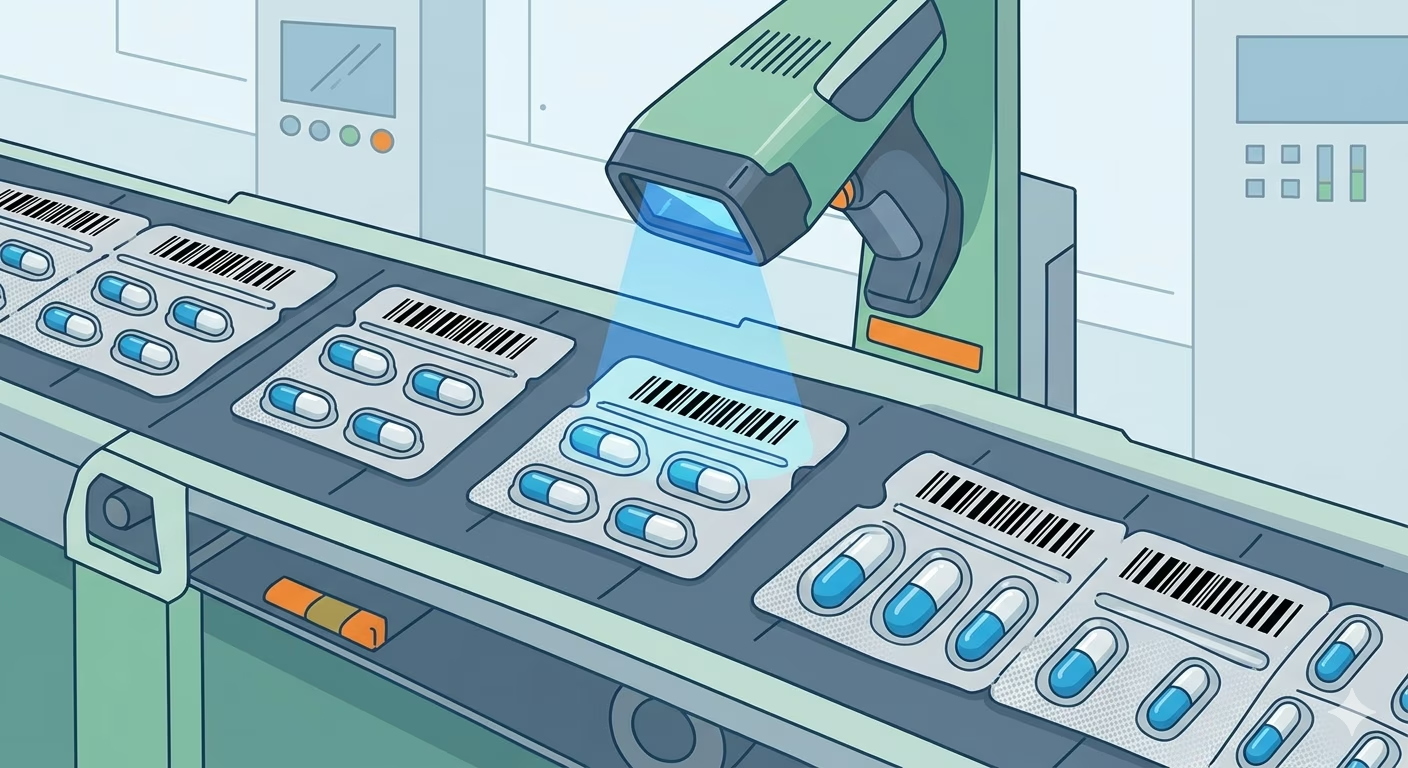
Blister Pack Packaging Verification
Pharmacode is printed on blister foil or carton panels and scanned by inline sensors on blister packaging machinery to verify the correct product is being packed before sealing. Each scan checks that the numeric product code on the foil matches the expected value for the active batch, preventing mix-ups between products with similar packaging that could cause serious patient safety incidents.
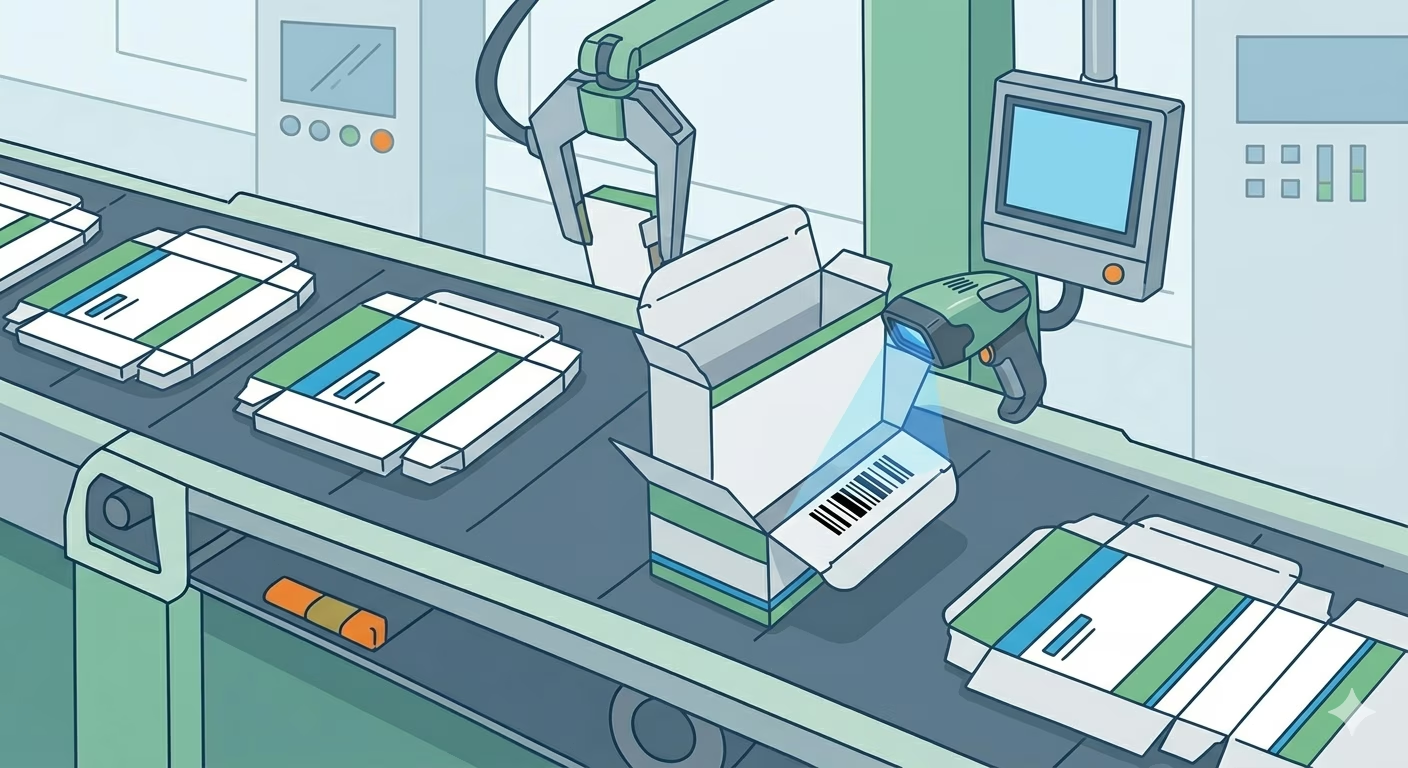
Folding Carton and Secondary Packaging
Pharmacode is printed on the outer face or tuck flap of pharmaceutical folding cartons. Packaging line scanners read the barcode as each carton is erected and loaded to confirm the correct carton is being filled with the correct primary container. This prevents product-to-carton mismatch errors at the secondary packaging stage — one of the most common sources of pharmaceutical packaging recalls.
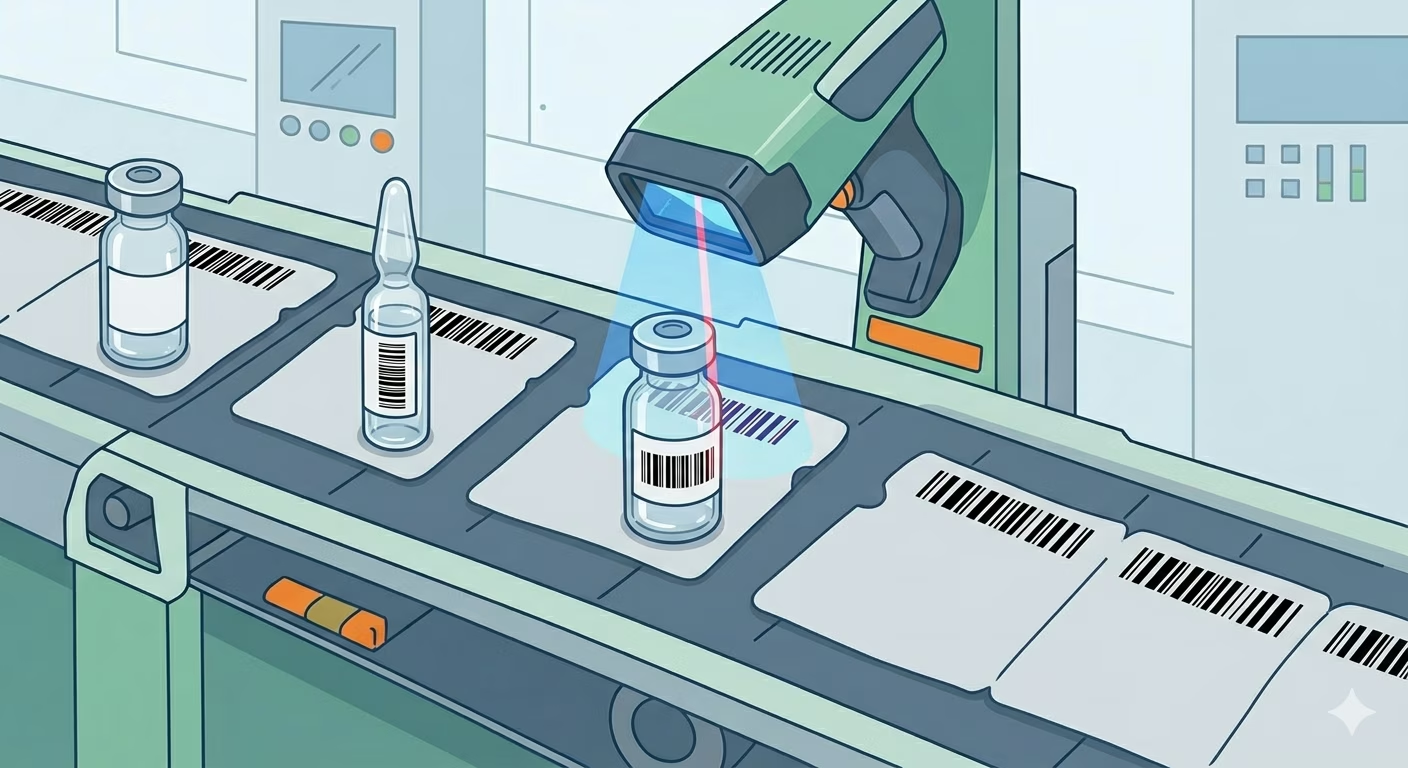
Ampoule and Vial Labels
Because Pharmacode produces a compact barcode from a small numeric value, it is well-suited to the narrow, curved label areas available on glass ampoules, vials, and pre-filled syringes. Pharmacode labels on primary containers are scanned during filling and inspection to verify product identity before the container enters the secondary packaging stage.
Pharmaceutical Leaflet and Insert Verification
Package inserts (patient information leaflets) often carry a Pharmacode that identifies both the product and the language version of the insert. Packaging machines scan the insert barcode before folding to confirm the correct language version is being matched with the correct product for the target market, preventing regulatory non-compliance in multi-market pharmaceutical distribution.
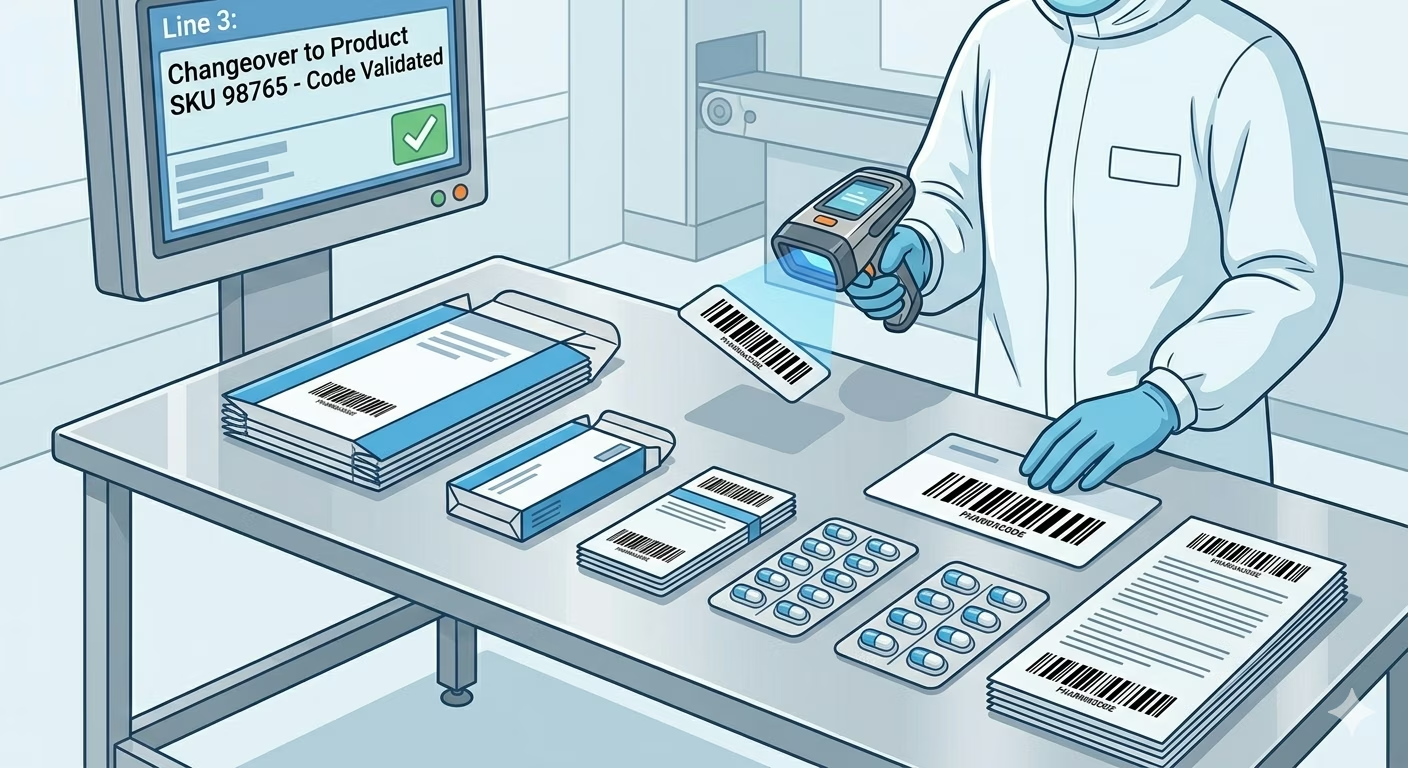
Packaging Line Setup and Changeover Validation
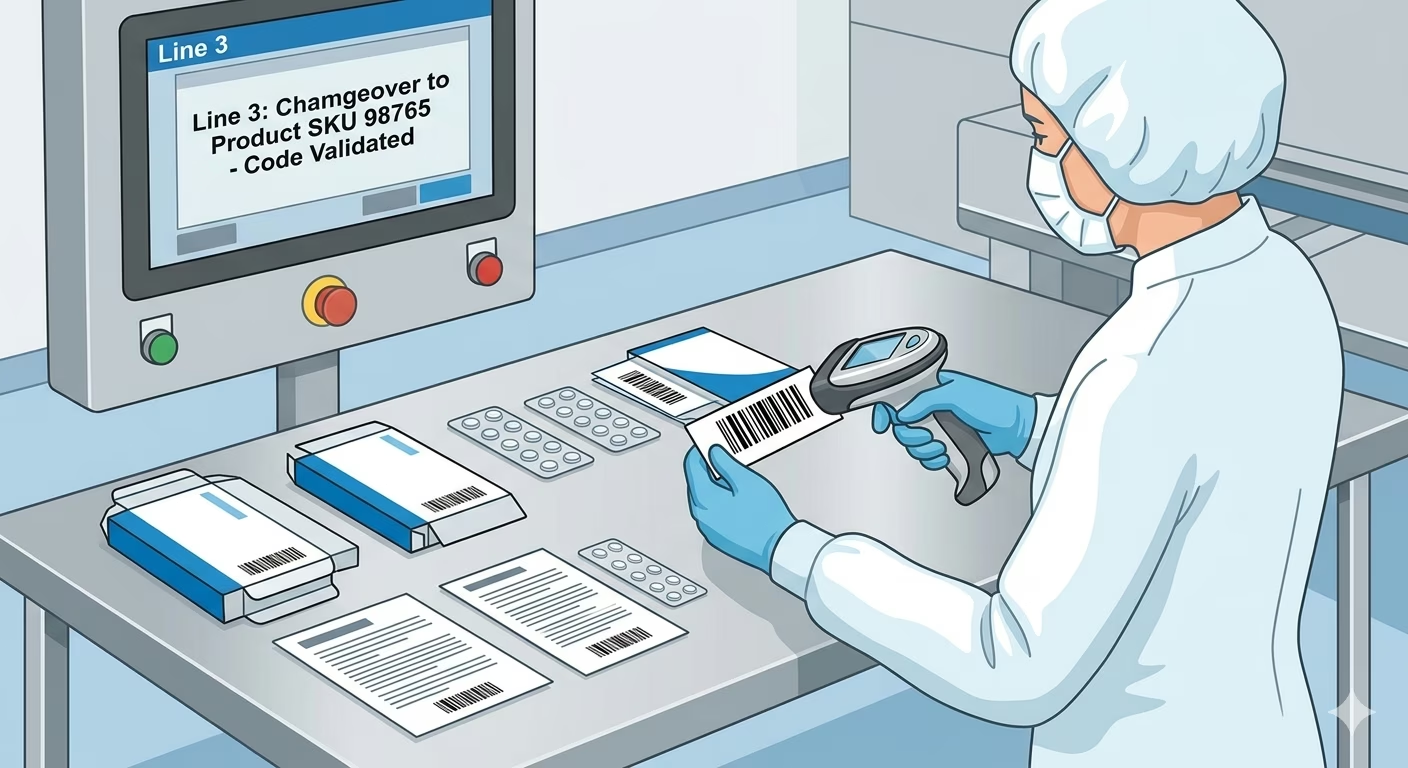
During packaging line changeover — when a line switches from one product batch to another — operators use Pharmacode readers to scan all packaging components (cartons, blister foils, inserts, labels) and confirm each component carries the correct code for the new batch. This changeover verification step is required under GMP guidelines and is one of the most common operational uses of Pharmacode outside of fully automated scanning.
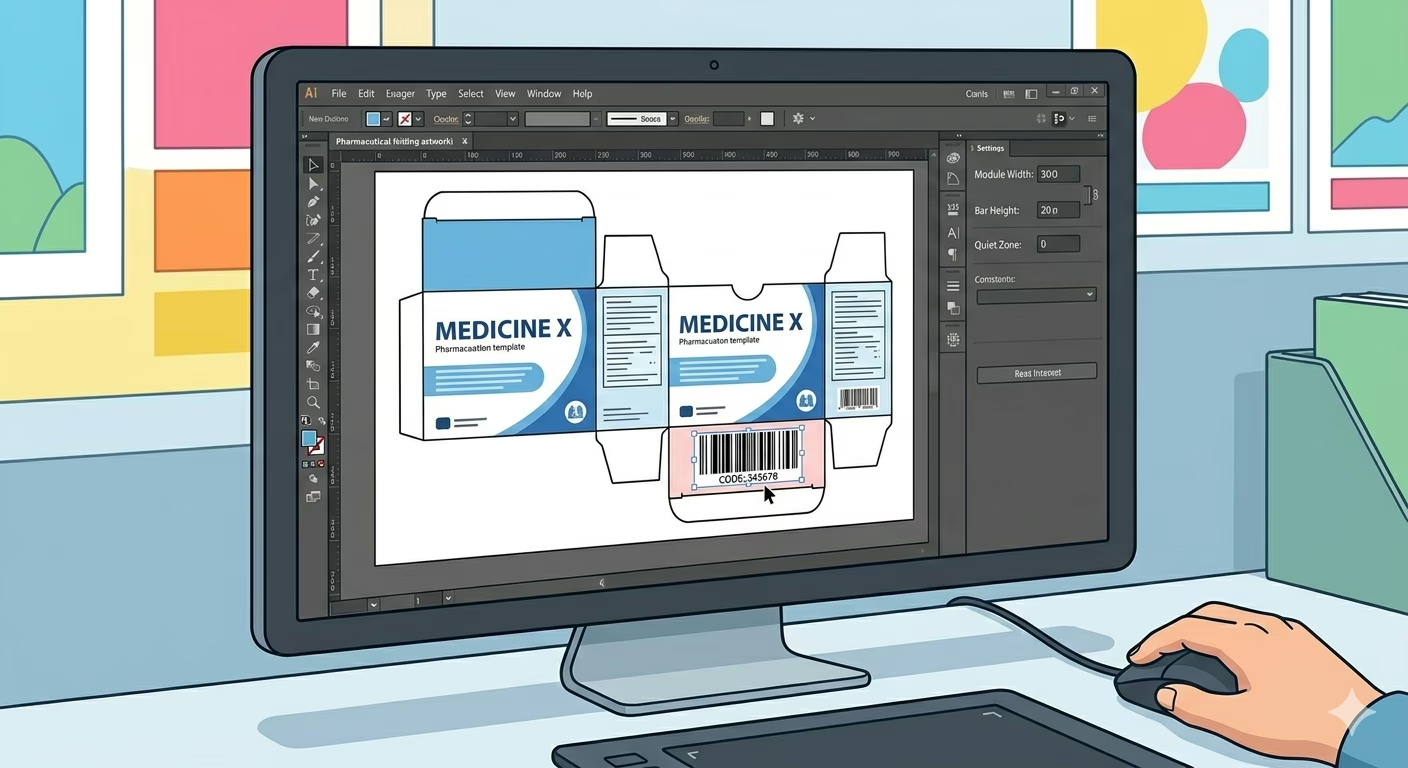
Packaging Artwork Specification and Prepress
Packaging artwork designers and prepress professionals generate Pharmacode barcodes as part of the artwork creation process for new or revised pharmaceutical products. The barcode must be placed correctly within the artwork, sized to meet the packaging machinery scanner specification, and verified against the product code in the packaging specification document before the artwork is approved for print production.
Pharmacode Barcode — Frequently Asked Questions
Technical answers to the most common questions about Pharmacode encoding rules, numeric range, pharmaceutical applications, and practical usage.
What is Pharmacode and what does it encode?
Pharmacode (Pharmaceutical Binary Code) is a one-dimensional barcode symbology designed specifically for the pharmaceutical packaging industry. It encodes a single integer numeric value between 3 and 131,070 using a binary representation: thick bars (3 modules wide) represent binary 1 and thin bars (1 module wide) represent binary 0. Unlike retail barcodes such as EAN-13 or Code 128, Pharmacode encodes only one number per barcode and contains no check digit — the simplicity of its encoding scheme is intentional, optimizing it for the ultra-high-speed inline scanning requirements of pharmaceutical packaging machinery.
What is the valid numeric range for Pharmacode?
Pharmacode can encode integers from 3 to 131,070 inclusive. Values below 3 cannot be encoded because the binary representation would produce fewer than two bars, which does not constitute a valid Pharmacode symbol. Values above 131,070 exceed the maximum number of bars that can be physically represented within a practical label area. If your product code falls outside this range, Pharmacode is not the correct symbology — consider Code 128 or GS1 DataMatrix for numeric identifiers beyond this range.
Does Pharmacode have a check digit?
No. Pharmacode does not include a check digit. Error detection relies entirely on the inherent redundancy of the binary encoding and the tolerance of the scanning system for detecting valid bar patterns. In practice, Pharmacode scanners on pharmaceutical packaging lines are highly calibrated and operate under controlled print quality conditions, which reduces the need for a mathematical check digit. For applications where check-digit verification is required, consider Code 128 (Mod 103 check digit) or GS1 DataMatrix (error correction codewords).
Why is Pharmacode used instead of EAN-13 or Code 128 on pharmaceutical packaging?
Pharmacode was specifically designed for the speed and reliability requirements of pharmaceutical packaging machinery. High-speed packaging lines scan barcodes at hundreds of units per minute using fixed-beam sensors; at these speeds, the simple two-element bar structure of Pharmacode (thick or thin — nothing else) is faster and more reliable to decode than the complex multi-width patterns of EAN-13 or Code 128. Pharmacode also offers superior tolerance for ink spread, label shrinkage, and substrate variation — common challenges in pharmaceutical printing on foils, coated cartons, and glossy labels. EAN-13 and Code 128 are standard for retail point-of-sale and logistics; Pharmacode is the standard for production line packaging verification.
Can Pharmacode be scanned in both directions?
Yes. Pharmacode is bi-directional: a scanner can read the barcode from left-to-right or right-to-left and decode the same numeric value in both cases. This eliminates the need for precise label orientation on packaging conveyors, increasing the probability of a successful scan during each label pass. Bi-directional readability is a key advantage in high-speed packaging environments where controlling label placement orientation within tight tolerances is operationally difficult.
What size should a Pharmacode barcode be for pharmaceutical packaging?
Pharmacode barcode dimensions depend on your packaging line scanner specification, the label substrate, and the available label area. As a general guideline, the X-dimension (module width) should be 0.495mm to 1.016mm, and the bar height should be at least 10mm for reliable scanning on most packaging machinery. Quiet zones (blank space on each side) should be a minimum of 10× the X-dimension. Always consult your packaging machinery supplier's Pharmacode reader specification document for the exact dimension requirements for your production line — these vary by scanner model and conveyor speed.
Is there a standard that governs Pharmacode?
Pharmacode is not governed by an ISO/IEC standard in the same way as Code 128 (ISO/IEC 15417) or EAN-13 (ISO/IEC 15420). It originated as a proprietary symbology developed by Laetus GmbH and is defined primarily through industry practice and packaging machinery manufacturer documentation. The specification is widely available from Laetus and has been implemented consistently across pharmaceutical packaging equipment globally. Because it lacks a formal international standard, implementations are validated against machinery scanner requirements rather than a published standard document.
Is my data safe when using this generator?
Yes. All Pharmacode encoding is performed entirely in your browser using client-side JavaScript. Your product codes and numeric values are never transmitted to any server and are never stored anywhere. Close the browser tab and all data is gone. This generator is safe to use with proprietary pharmaceutical product codes, internal product numbering schemes, and commercially sensitive packaging specifications.
Specification reference
Read the full Pharmacode specification — character set, check digit, quiet zone, density, and the governing Laetus proprietary specification standard — in our barcode glossary.
Pharmacode specificationRelated barcode types
Compare Pharmacode with similar symbologies, or open their full specifications.
Related barcode tools
Need more than one barcode, a printed label sheet, or a way to check the result? These tools use the same generator, so the output matches.
- Bulk Barcode GeneratorImport Excel or CSV, paste a list, or create a sequence and get a barcode for every row. Export as PNG, SVG, JPG, or a ZIP.
- Barcode Label PrintPrint a full sheet of labels that lines up with Avery label stock, at the correct physical size.
- Barcode ScannerVerify a printed label before you run the whole batch — decode it from an image or your camera.
- Barcode MakerFull control over size, colors, font, quiet zone, and layout for a single barcode.
Generate Your Pharmacode Barcode Now — Free, Instant, No Account Required
This free Pharmacode barcode generator is ready to use immediately. Enter your pharmaceutical product code, adjust the barcode dimensions to your label specification, and download a print-ready PNG or SVG in seconds. No signup, no watermarks, no usage limits. All encoding happens locally in your browser — your product codes stay private. Generate a single barcode for an artwork proof or hundreds for a full product catalog; the tool is completely free regardless of volume.